


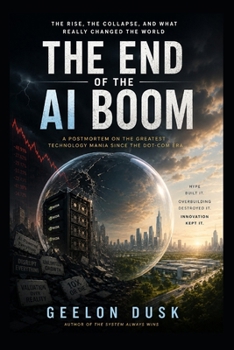
The End of the AI Boom: The Bubble That Thought

A provocative postmortem on the greatest technology mania since the dot-com era.
For years, the world believed AI would rewrite the laws of economics.
Investors poured trillions into datacenters, GPUs, and startups with no defensible business models. Companies slapped "AI-powered" onto every product imaginable. Governments raced to secure compute like nations once raced for oil. Venture capitalists funded wrappers built on top of other companies' models and called them revolutions.
Then reality arrived.
GPU shortages became GPU gluts.
Inference became cheap.
Open source caught up.
Margins collapsed.
And the market discovered a brutal truth:
transformative technology does not guarantee transformative profits.
In The End of the AI Boom, the rise and unraveling of the artificial intelligence frenzy is examined through the lens of history, economics, infrastructure, and technological cycles. Drawing parallels to the dot-com crash, telecom overbuild, railroad bubbles, and cloud commoditization, the book argues that AI was always destined to survive - but much of the speculative empire built around it was not.
Inside the book:
Why GPU overcapacity became inevitableHow wrapper companies vanished almost overnightWhy NVIDIA became the next IntelHow OpenAI evolved from myth to infrastructureWhy AI first became expensive - then shockingly cheapHow the world confused scarcity with defensibilityAnd why the technologies that truly change civilization eventually become invisibleThis is not an anti-AI book.
It is a book about what happens after the hype dies.
Sharp, analytical, and deeply relevant, The End of the AI Boom is for readers of:
The Big ShortThe Innovator's DilemmaDot.Conand anyone who has ever wondered whether the AI economy was built on innovation, panic, or both.Because every technological revolution creates two things:
a future that survives,
and a bubble that doesn't.
Customer Reviews
ThriftBooks ® and the ThriftBooks ® logo are registered trademarks of Thrift Books Global, LLC
