


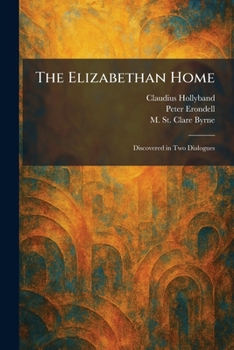
The Elizabethan Home: Discovered in Two Dialogues

"The Elizabethan Home: Discovered in Two Dialogues" offers a fascinating and intimate glimpse into the domestic realities of 16th-century England through the eyes of contemporary observers. Compiled from the works of Claudius Hollyband and Peter Erondell, two French teachers living in London during the reign of Elizabeth I, these dialogues were originally designed as language lessons. Today, they serve as an invaluable primary source and historical record of daily life, capturing the authentic speech, customs, and social etiquette of the era.
Readers are invited into the bustling atmosphere of a Tudor household, witnessing everything from the morning routines and schooling of children to the elaborate preparations for a formal dinner. The text vividly portrays the interactions between masters and servants, the nuances of middle-class social climbing, and the specific material culture of the period. Edited by the esteemed scholar M. St. Clare Byrne, this collection preserves the charm and vitality of the original prose while providing a window into a world of bustling markets, strict schoolmasters, and the complex social fabric of the late Renaissance. It remains an essential work for historians, students of literature, and anyone interested in the lived experience of the Elizabethan age.
This work has been selected by scholars as being culturally important, and is part of the knowledge base of civilization as we know it. This work was reproduced from the original artifact, and remains as true to the original work as possible. Therefore, you may see the original copyright references, library stamps (as most of these works have been housed in our most important libraries around the world), and other notations in the work.
This work is in the public domain in the United States of America, and possibly other nations. Within the United States, you may freely copy and distribute this work, as no entity (individual or corporate) has a copyright on the body of the work.
As a reproduction of a historical artifact, this work may contain missing or blurred pages, poor pictures, errant marks, etc. Scholars believe, and we concur, that this work is important enough to be preserved, reproduced, and made generally available to the public. We appreciate your support of the preservation process, and thank you for being an important part of keeping this knowledge alive and relevant.
Customer Reviews
ThriftBooks ® and the ThriftBooks ® logo are registered trademarks of Thrift Books Global, LLC
