


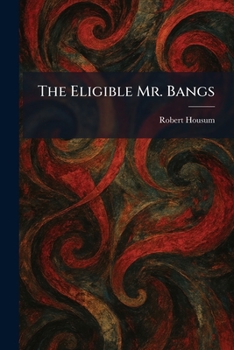
The Eligible Mr. Bangs

"The Eligible Mr. Bangs" is a witty and charming one-act comedy by American playwright Robert Housum. Set against the backdrop of early 20th-century social life, the play delves into the intricacies of courtship, reputation, and the pressures of finding a suitable spouse in refined society. Through sharp dialogue and clever situational humor, Housum explores the perceptions surrounding the character of Mr. Bangs and the expectations placed upon him by his peers.
As a notable example of American light drama from the late 1920s, the work captures the era's unique blend of sophistication and humor regarding romance and social status. Written for the stage, it highlights Housum's skill in creating memorable characters and engaging banter within a compact theatrical structure. "The Eligible Mr. Bangs" remains a significant piece for those interested in the history of American theater, offering a lighthearted yet insightful look at the timeless themes of identity and social convention. This play continues to be valued for its comedic timing and its vivid portrayal of early modern social dynamics.
This work has been selected by scholars as being culturally important, and is part of the knowledge base of civilization as we know it. This work was reproduced from the original artifact, and remains as true to the original work as possible. Therefore, you may see the original copyright references, library stamps (as most of these works have been housed in our most important libraries around the world), and other notations in the work.
This work is in the public domain in the United States of America, and possibly other nations. Within the United States, you may freely copy and distribute this work, as no entity (individual or corporate) has a copyright on the body of the work.
As a reproduction of a historical artifact, this work may contain missing or blurred pages, poor pictures, errant marks, etc. Scholars believe, and we concur, that this work is important enough to be preserved, reproduced, and made generally available to the public. We appreciate your support of the preservation process, and thank you for being an important part of keeping this knowledge alive and relevant.
Related Subjects
DramaCustomer Reviews
ThriftBooks ® and the ThriftBooks ® logo are registered trademarks of Thrift Books Global, LLC
