


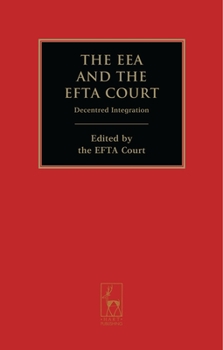
The Eea and the Efta Court: Decentred Integration
No Customer Reviews

The EEA Agreement extends the free movement of persons, goods, services and capital to the EEA/EFTA States: Iceland, Liechtenstein and Norway. It provides for equal conditions of competition and abolishes discrimination on grounds of nationality in all 31 EEA States. The successful operation of the EEA depends upon a two-pillar system of supervision involving the European Commission and
the EFTA Surveillance Authority. A two-pillar structure has also been established in respect of judicial control with the EFTA Court operating in parallel to the Court of Justice of the European Union.
Format:Hardcover
Language:English
ISBN:1849466262
ISBN13:9781849466264
Release Date:January 2015
Publisher:Hart Publishing
Length:596 Pages
Weight:2.22 lbs.
Dimensions:1.3" x 6.1" x 9.2"
Related Subjects
LawCustomer Reviews
0 rating
Copyright © 2026 Thriftbooks.com
Terms of Use | Privacy Policy | Do Not Sell/Share My Personal Information | Cookie Policy | Cookie Preferences | Accessibility Statement
ThriftBooks ® and the ThriftBooks ® logo are registered trademarks of Thrift Books Global, LLC
ThriftBooks ® and the ThriftBooks ® logo are registered trademarks of Thrift Books Global, LLC
