


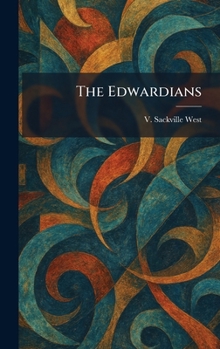
The Edwardians

"The Edwardians" is a vivid and penetrating portrait of British high society during the reign of King Edward VII. The novel follows the life of Sebastian, a young duke and heir to Chevron, a magnificent country estate that serves as both a symbol of prestige and a gilded cage. As Sebastian navigates the rigid expectations, elaborate rituals, and decadent lifestyles of the landed gentry, he finds himself increasingly disillusioned with the superficiality of his social circle.
Through Sebastian's encounters with a variety of influential figures-including his rebellious sister Viola and the worldly explorer Anworth-V. Sackville-West explores the tensions between personal desire and ancestral duty. The narrative serves as both a lush period piece and a sharp social satire, capturing a world on the brink of transformation. Written with an insider's perspective, "The Edwardians" offers a profound meditation on the constraints of tradition and the inevitable shift toward the modern age. It remains a definitive work of 20th-century literature, celebrated for its rich atmosphere, psychological depth, and its evocative depiction of a vanished way of life.
This work has been selected by scholars as being culturally important, and is part of the knowledge base of civilization as we know it. This work was reproduced from the original artifact, and remains as true to the original work as possible. Therefore, you may see the original copyright references, library stamps (as most of these works have been housed in our most important libraries around the world), and other notations in the work.
This work is in the public domain in the United States of America, and possibly other nations. Within the United States, you may freely copy and distribute this work, as no entity (individual or corporate) has a copyright on the body of the work.
As a reproduction of a historical artifact, this work may contain missing or blurred pages, poor pictures, errant marks, etc. Scholars believe, and we concur, that this work is important enough to be preserved, reproduced, and made generally available to the public. We appreciate your support of the preservation process, and thank you for being an important part of keeping this knowledge alive and relevant.
Customer Reviews
ThriftBooks ® and the ThriftBooks ® logo are registered trademarks of Thrift Books Global, LLC
