


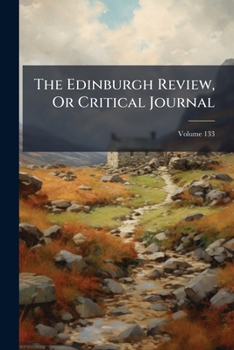
The Edinburgh Review, Or Critical Journal; Volume 133

Select Format
Select Condition 
Book Overview
Dive into the intellectual landscape of 19th-century Britain with Volume 133 of "The Edinburgh Review, Or Critical Journal." This meticulously preserved collection offers a fascinating glimpse into the pressing issues, literary debates, and political discourse that shaped the era. Anonymous, but undoubtedly authored by some of the leading thinkers of the time, this volume showcases a range of essays and critical analyses that reflect the prevailing attitudes and emerging ideas of the period.
From insightful commentary on historical events to incisive critiques of contemporary literature and culture, "The Edinburgh Review" provides invaluable insights into the intellectual currents that defined Victorian society. Readers will appreciate the depth of analysis, the breadth of subject matter, and the enduring relevance of the issues explored within these pages. This volume serves as an essential resource for scholars, historians, and anyone interested in understanding the complexities of British history and the evolution of modern thought.
This work has been selected by scholars as being culturally important, and is part of the knowledge base of civilization as we know it. This work was reproduced from the original artifact, and remains as true to the original work as possible. Therefore, you will see the original copyright references, library stamps (as most of these works have been housed in our most important libraries around the world), and other notations in the work.
This work is in the public domain in the United States of America, and possibly other nations. Within the United States, you may freely copy and distribute this work, as no entity (individual or corporate) has a copyright on the body of the work.
As a reproduction of a historical artifact, this work may contain missing or blurred pages, poor pictures, errant marks, etc. Scholars believe, and we concur, that this work is important enough to be preserved, reproduced, and made generally available to the public. We appreciate your support of the preservation process, and thank you for being an important part of keeping this knowledge alive and relevant.
Customer Reviews
ThriftBooks ® and the ThriftBooks ® logo are registered trademarks of Thrift Books Global, LLC
