


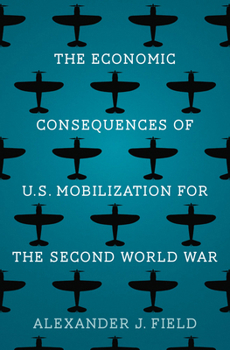
The Economic Consequences of U.S. Mobilization for the Second World War
No Customer Reviews

A reminder that war is not always, or even generally, good for long-term growth Many believe that despite its destructive character, war ultimately boosts long-term economic growth. For the United States this view is often supported by appeal to the experience of the Second World War, understood as a triumph of both production and productivity. Alexander Field shows that between 1941 and 1945 manufacturing productivity actually declined, depressed by changes in the output mix and resource shocks from enemy action, including curtailed access to natural rubber and, on the Eastern Seaboard, petroleum. The war forced a shift away from producing goods in which the country had a great deal of experience toward those in which it had little. Learning by doing was only a partial counterbalance to the intermittent idleness and input hoarding that characterized a shortage economy and dragged down productivity. The conflict distorted human and physical capital accumulation, and once it ended, America stopped producing most of the new goods. The war temporarily shut down basic scientific research and the ongoing development of civilian goods. U.S. world economic dominance in 1948, Field shows, was due less to the experience of making war goods and more to the country's productive potential in 1941.
Format:Paperback
Language:English
ISBN:0300276710
ISBN13:9780300276718
Release Date:February 2024
Publisher:Yale University Press
Length:466 Pages
Weight:1.30 lbs.
Dimensions:1.3" x 6.3" x 9.2"
Customer Reviews
0 rating
Copyright © 2026 Thriftbooks.com
Terms of Use | Privacy Policy | Do Not Sell/Share My Personal Information | Cookie Policy | Cookie Preferences | Accessibility Statement
ThriftBooks ® and the ThriftBooks ® logo are registered trademarks of Thrift Books Global, LLC
ThriftBooks ® and the ThriftBooks ® logo are registered trademarks of Thrift Books Global, LLC
