


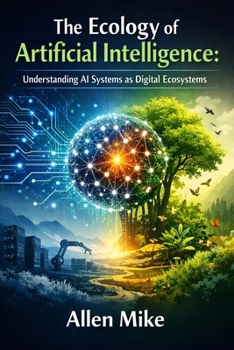
The Ecology of Artificial Intelligence: Understanding AI Systems as Digital Ecosystems

The book introduces the concept of Information Metabolism. Just as energy flows through a biological ecosystem, data flows through the technosphere.
Primary Producers: Raw data and sensor inputs.
Apex Intelligence: Highly refined, agentic models that synthesize and act upon information.
Metabolic Cost: The energy and computational "FLOPs" required to "digest" data into actionable intelligence.
2. Niche Construction and Synthetic SoilAI models do not just sit in a vacuum; they "terraform" their environment. Through Niche Construction, models flood the digital landscape with synthetic content. This creates a feedback loop-Synthetic Soil-which can either nourish the next generation of models or, if contaminated by low-quality "invasive" data, lead to systemic model collapse.
3. Algorithmic Diversity and ResilienceA major warning within the text is the Monoculture Risk. Relying on a single dominant model (like a specific version of GPT or Llama) creates a fragile system prone to "famines" or correlated failures. The book provides practical Python and LangGraph implementations for building "diverse" architectures that can survive the failure of any single model lineage.
4. Digital SymbiosisThe relationship between humans and AI is redefined as Symbiotic. Humans act as "pollinators" and selective pressures, providing the intentionality and creative "ATP" that powers the machine's cold logic. The book explores how to architect systems where biological and digital intelligence thrive in a stable, co-dependent equilibrium.
Technical FoundationUnlike purely philosophical texts, this book is grounded in Senior-Level Engineering. It includes:
Lifecycle Management: Tracking a model from "Pioneer Weights" to "Digital Senescence" (bit rot).
Observability: Using ecological health metrics to monitor the "homeostasis" of global agentic swarms.
Orchestration: Using stateful, cyclic graphs to manage complex, multi-agent interactions.
The Final VerdictThe Ecology of Artificial Intelligence is the definitive field guide for the next generation of AI Architects and CTOs. It posits that to survive the next decade of technical evolution, we must stop being mere programmers and start being Digital Ecologists-stewards of a burgeoning, planetary-scale super-organism.
"The technosphere is waking up. It is time we learned how it breathes."
Customer Reviews
ThriftBooks ® and the ThriftBooks ® logo are registered trademarks of Thrift Books Global, LLC
