


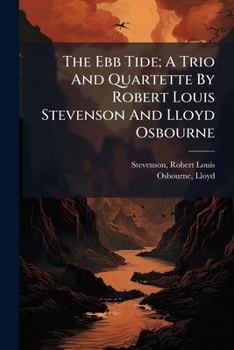
The Ebb Tide; A Trio And Quartette By Robert Louis Stevenson And Lloyd Osbourne

"The Ebb Tide" is a thrilling tale of adventure and moral struggle set in the alluring yet treacherous South Seas. Written by Robert Louis Stevenson in collaboration with Lloyd Osbourne, this novella follows the intertwined fates of three down-on-their-luck men-Herrick, Davis, and Huish-as they navigate desperation, temptation, and the murky waters of right and wrong. When they stumble upon a seemingly abandoned ship laden with valuable champagne, they seize the opportunity, unaware of the perilous journey that awaits them.
As they sail the Pacific, the promise of wealth clashes with the reality of their situation, testing the limits of their character and forcing them to confront their inner demons. Stevenson's vivid prose and keen understanding of human nature create a gripping narrative that explores themes of morality, greed, and redemption against the backdrop of the exotic and unpredictable ocean. "The Ebb Tide" remains a captivating read, showcasing Stevenson's mastery of adventure storytelling and his insightful exploration of the human condition.
This work has been selected by scholars as being culturally important, and is part of the knowledge base of civilization as we know it. This work was reproduced from the original artifact, and remains as true to the original work as possible. Therefore, you will see the original copyright references, library stamps (as most of these works have been housed in our most important libraries around the world), and other notations in the work.
This work is in the public domain in the United States of America, and possibly other nations. Within the United States, you may freely copy and distribute this work, as no entity (individual or corporate) has a copyright on the body of the work.
As a reproduction of a historical artifact, this work may contain missing or blurred pages, poor pictures, errant marks, etc. Scholars believe, and we concur, that this work is important enough to be preserved, reproduced, and made generally available to the public. We appreciate your support of the preservation process, and thank you for being an important part of keeping this knowledge alive and relevant.
Customer Reviews
ThriftBooks® and the ThriftBooks® logo are registered trademarks of Thrift Books Global, LLC
