


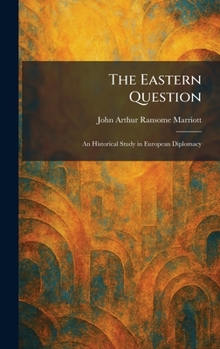
The Eastern Question: An Historical Study in European Diplomacy

"The Eastern Question" is a definitive historical study examining the complex diplomatic and political problems posed by the gradual decline of the Ottoman Empire in Europe. Sir J. A. R. Marriott provides a comprehensive analysis of the geopolitical shifts that defined international relations from the fall of Constantinople to the early 20th century.
The work delves into the conflicting interests of the Great Powers-including Britain, France, Russia, and Austria-as they vied for influence in the Balkans and the Levant. Through meticulous research, Marriott explores the rise of nationalism among the subject peoples of the Porte and the intricate treaties and alliances that attempted to maintain the balance of power. This scholarly volume serves as an essential resource for understanding the origins of modern European and Middle Eastern conflicts.
It offers deep insights into the roles of key historical figures and the strategic importance of the Dardanelles and the Bosphorus. By tracing the evolution of the "Eastern Question," the author elucidates the tensions that ultimately shaped the geopolitical landscape of the modern world. This work remains a cornerstone for students of history and political science interested in the mechanisms of 19th and early 20th-century diplomacy.
This work has been selected by scholars as being culturally important, and is part of the knowledge base of civilization as we know it. This work was reproduced from the original artifact, and remains as true to the original work as possible. Therefore, you may see the original copyright references, library stamps (as most of these works have been housed in our most important libraries around the world), and other notations in the work.
This work is in the public domain in the United States of America, and possibly other nations. Within the United States, you may freely copy and distribute this work, as no entity (individual or corporate) has a copyright on the body of the work.
As a reproduction of a historical artifact, this work may contain missing or blurred pages, poor pictures, errant marks, etc. Scholars believe, and we concur, that this work is important enough to be preserved, reproduced, and made generally available to the public. We appreciate your support of the preservation process, and thank you for being an important part of keeping this knowledge alive and relevant.
Customer Reviews
ThriftBooks ® and the ThriftBooks ® logo are registered trademarks of Thrift Books Global, LLC
