


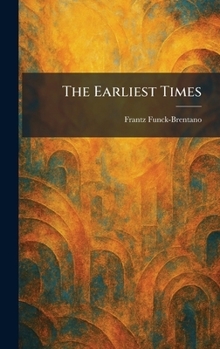
The Earliest Times

"The Earliest Times" is a sweeping historical narrative that explores the origins and foundational eras of what would become the nation of France. Written by the distinguished historian Frantz Funck-Brentano, this work serves as an essential examination of the region's development from its prehistoric roots through the arrival of the Celts and the subsequent era of Roman occupation.
The narrative meticulously details the transformation of Gaul under Roman influence and the eventual rise of the Frankish dynasties. By examining the social, political, and cultural shifts of these formative centuries, Funck-Brentano provides a vivid portrait of the various peoples-from the Druids to the early Merovingian kings-who shaped the identity of the French territory. Through careful analysis of archeological evidence and early chronicles, the work illuminates the transition from tribal societies to the beginnings of a structured medieval state.
Rich in scholarly detail yet written with an engaging literary flair, "The Earliest Times" captures the struggle between ancient traditions and emerging European structures. It offers readers a profound look at the legendary figures and major migrations that defined the early landscape of Western Europe. This volume remains a significant resource for those seeking to understand the deep-seated historical currents that led to the birth of modern France.
This work has been selected by scholars as being culturally important, and is part of the knowledge base of civilization as we know it. This work was reproduced from the original artifact, and remains as true to the original work as possible. Therefore, you may see the original copyright references, library stamps (as most of these works have been housed in our most important libraries around the world), and other notations in the work.
This work is in the public domain in the United States of America, and possibly other nations. Within the United States, you may freely copy and distribute this work, as no entity (individual or corporate) has a copyright on the body of the work.
As a reproduction of a historical artifact, this work may contain missing or blurred pages, poor pictures, errant marks, etc. Scholars believe, and we concur, that this work is important enough to be preserved, reproduced, and made generally available to the public. We appreciate your support of the preservation process, and thank you for being an important part of keeping this knowledge alive and relevant.
Related Subjects
HistoryCustomer Reviews
ThriftBooks ® and the ThriftBooks ® logo are registered trademarks of Thrift Books Global, LLC
