


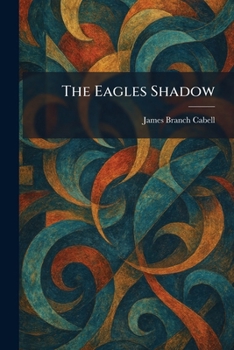
The Eagles Shadow

"The Eagle's Shadow" is a sparkling comedy of manners and the debut novel by the celebrated author James Branch Cabell. Set within the refined atmosphere of a Virginia country estate, the narrative centers on the spirited Margaret Hugonin and the intricate social complications that arise following a disputed inheritance. As Margaret finds herself at the center of a whirlwind of romantic interests and family expectations, the story examines the often-clashing values of wealth, pride, and genuine affection.
Through sharp dialogue and a keen sense of irony, Cabell satirizes the conventions and eccentricities of the social elite. The central conflict involves Margaret's relationship with the idealistic Billy Woods, as well as a cast of supporting characters who bring both humor and insight to the proceedings. The work explores themes of vanity and the unpredictability of the human heart, all while maintaining an elegant and lighthearted tone.
While distinct from the fantastical realms for which Cabell later became famous, "The Eagle's Shadow" demonstrates his early mastery of prose and his ability to capture the absurdities of human behavior. It remains a charming example of early 20th-century American fiction, offering a sophisticated blend of wit and sentiment that continues to entertain readers interested in the complexities of social status and romance.
This work has been selected by scholars as being culturally important, and is part of the knowledge base of civilization as we know it. This work was reproduced from the original artifact, and remains as true to the original work as possible. Therefore, you may see the original copyright references, library stamps (as most of these works have been housed in our most important libraries around the world), and other notations in the work.
This work is in the public domain in the United States of America, and possibly other nations. Within the United States, you may freely copy and distribute this work, as no entity (individual or corporate) has a copyright on the body of the work.
As a reproduction of a historical artifact, this work may contain missing or blurred pages, poor pictures, errant marks, etc. Scholars believe, and we concur, that this work is important enough to be preserved, reproduced, and made generally available to the public. We appreciate your support of the preservation process, and thank you for being an important part of keeping this knowledge alive and relevant.
Customer Reviews
ThriftBooks ® and the ThriftBooks ® logo are registered trademarks of Thrift Books Global, LLC
