


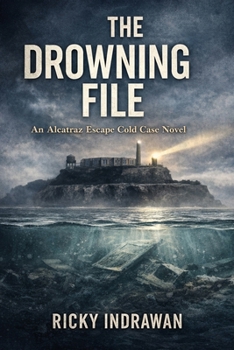
The Drowning File: An Alcatraz Escape Cold Case Novel
No Customer Reviews

Based on the true crime mystery inspired by the Alcatraz escape case, The Drowning File is a cold case thriller about disappearance, institutional secrecy, and the dangerous power of an official story told too quickly.
Before dawn, a rescue alarm pulls Owen Pryce into the freezing fog around Blackwater Rock, an island prison surrounded by black water, brutal currents, and rules that matter more than truth. Owen is not a man given to conspiracy. He trusts procedure, timing, search patterns, and what the body of the water can reveal to those who know how to read it. But when he reaches the island perimeter, something is already wrong. Three inmates have vanished from their cells. A body has surfaced in the bay. And long before the facts are settled, the prison seems determined to force the case into a conclusion the world can consume. By morning count, the decoy beds are exposed and the escape has become a headline. Officials want speed. They want a version that sounds disciplined, defensible, and final. Accident. Miscount. Drowning. Case progression. But the evidence refuses to behave. The marks on the wrists do not match what the water should have done. Searchlight gaps feel deliberate. Reports explain too much in one place and not enough in another. Attachments are referenced, then disappear. The file grows heavier even as the truth becomes harder to hold. Meredith Shaw of the Fugitive Affairs Unit is brought in to review the case and deliver a recommendation that can survive outside the institution. She is not interested in spectacle, rumor, or public theater. She believes in paper trails, chain of custody, and language precise enough to resist manipulation. But Blackwater Rock is not merely hiding facts. It is managing uncertainty. Every interview comes with pressure. Every memo carries the fingerprints of containment. Every answer opens a new administrative wound no one wants examined in daylight. Then the myth machine wakes up. A viral video claiming new proof spreads across screens and drags the old escape back into public obsession. Commentators demand closure. Audiences want certainty. The prison wants stability. Meredith wants evidence. And Owen, still working the water, knows the bay has its own record-cold, physical, indifferent-and it does not fully agree with the version being prepared for public release. As Meredith digs deeper, she uncovers a system more invested in narrative control than resolution. The question is no longer whether men escaped the island. The question is what happened after the perimeter was breached, who benefited from confusion, and why ambiguity itself may have been the most useful outcome of all. In a case shaped by missing documents, managed language, and institutional self-protection, truth becomes more than a destination. It becomes a threat. The Drowning File combines cinematic suspense with procedural intelligence, delivering a tense and emotionally controlled investigation where violence is never used as spectacle and every revelation carries human cost. This is not a simple prison-break retelling. It is a layered mystery about evidence, memory, media pressure, and the price of forcing closure onto a case that may have been designed to remain unresolved. Perfect for readers who love true crime-inspired fiction, prison escape mysteries, archival investigations, atmospheric island settings, morally complex investigators, and slow-burning suspense built from documents, contradiction, and dread. If you are drawn to cold case thrillers in which institutions lie by refining the language, the public mistakes confidence for truth, and the water keeps secrets longer than any witness, open The Drowning File and follow the record to the place where certainty breaks apart. Some escapes become legend.Some files become weaponized.
And some truths survive only in fragments.
Format:Paperback
Language:English
ISBN:B0GRFRVLWJ
ISBN13:9798250849630
Release Date:March 2026
Publisher:Independently Published
Length:540 Pages
Weight:1.57 lbs.
Dimensions:1.1" x 6.0" x 9.0"
Customer Reviews
0 rating
Copyright © 2026 Thriftbooks.com
Terms of Use | Privacy Policy | Do Not Sell/Share My Personal Information | Cookie Policy | Cookie Preferences | Accessibility Statement
ThriftBooks ® and the ThriftBooks ® logo are registered trademarks of Thrift Books Global, LLC
ThriftBooks ® and the ThriftBooks ® logo are registered trademarks of Thrift Books Global, LLC
