


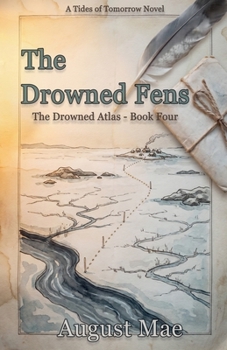
The Drowned Fens

Wren has spent her life learning to read water. Nothing in it has taught her how to read a sea that has stopped moving.
After years of circling the flooded coasts of Britain for Rhea, the engineer she loved and lost to the deep, Wren follows a letter east: the first Rhea ever sent in her name, telling her to winter in the drowned Fens and be findable when the ice comes. Wren has chased a warm wake across half an ocean. Now, for the first time, the trail ends not in a rumour or a days-old repair but in a place that truly holds her. Rhea is here. Not a season ahead. Here.
Then the cold comes down, the hardest in fifty years, harder than any since the waters first rose.
The Fens are a wide shallow country of reed and brown water, where the Mere-folk live on scattered island eys and thread the lodes between them by punt and pole. When the great freeze sets the meres to iron overnight, every ey is cut off from every other, the stores half laid, the sick and the old stranded where they stand, and the people fall back on the oldest law their winters have taught them: each ey keeps its own, and waits the thaw, because the ice kills the impatient first. And Rhea is on the wrong side of it, sealed on the farthest ey of all, beyond a black river-course that the deep current keeps from ever freezing hard.
For the first time in the long search, the thing between Wren and Rhea is not distance. It is stillness. Her whole craft is motion, and the water will not move. To reach the woman a few miles off, she will have to give up the chase she has run her whole life, learn an ice that does not bargain, and do the one thing that has always cost her the most: stay, and bind a frozen country together, one tested mark at a time, when every instinct screams at her to run across the killing white and take what she came for.
A story in the world of the Tides of Tomorrow, and the fourth novel of The Drowned Atlas, The Drowned Fens is hopepunk for readers of Becky Chambers, Emily St. John Mandel, and Lily Brooks-Dalton: warm, cold-skied, and built on the conviction that the way to reach one person in a broken world is to mend the whole of it, one community at a time, and that some crossings are not seized but earned, like the thaw, when the water comes back.
Customer Reviews
ThriftBooks ® and the ThriftBooks ® logo are registered trademarks of Thrift Books Global, LLC
