


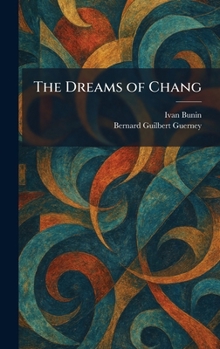
The Dreams of Chang

"The Dreams of Chang" is a profound collection of short stories by the Nobel Prize-winning Russian author Ivan Bunin, capturing the evocative and melancholic spirit of early 20th-century literature. The title story is a masterpiece of perspective, told through the memories of an aging dog named Chang and his master, a former sea captain. Together, they reflect on their shared history of oceanic adventures and the subsequent descent into a life of quiet isolation, exploring the inevitable passage of time and the weight of lost dreams.
Throughout this collection, Bunin demonstrates his mastery of the short story form, utilizing lyrical prose and sharp psychological insight to examine the complexities of love, mortality, and the Russian soul. His narratives are marked by a unique blend of realism and philosophical depth, often highlighting the contrast between the grandeur of the natural world and the fragility of human existence. The stories serve as meditative windows into a world of sensory richness and existential longing.
Renowned for its stylistic elegance and emotional resonance, "The Dreams of Chang" stands as a testament to Bunin's literary legacy. This work remains an essential read for those interested in the evolution of Russian prose and the timeless exploration of the human heart's enduring mysteries.
This work has been selected by scholars as being culturally important, and is part of the knowledge base of civilization as we know it. This work was reproduced from the original artifact, and remains as true to the original work as possible. Therefore, you may see the original copyright references, library stamps (as most of these works have been housed in our most important libraries around the world), and other notations in the work.
This work is in the public domain in the United States of America, and possibly other nations. Within the United States, you may freely copy and distribute this work, as no entity (individual or corporate) has a copyright on the body of the work.
As a reproduction of a historical artifact, this work may contain missing or blurred pages, poor pictures, errant marks, etc. Scholars believe, and we concur, that this work is important enough to be preserved, reproduced, and made generally available to the public. We appreciate your support of the preservation process, and thank you for being an important part of keeping this knowledge alive and relevant.
Customer Reviews
ThriftBooks ® and the ThriftBooks ® logo are registered trademarks of Thrift Books Global, LLC
