


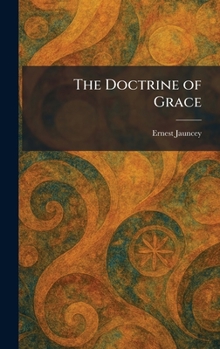
The Doctrine of Grace

"The Doctrine of Grace" is a comprehensive theological exploration of one of the most fundamental concepts in Christian thought. Written by Ernest Jauncey, this work provides a meticulous examination of the nature, necessity, and operation of divine grace as understood within the Christian tradition. The book traces the historical development of the doctrine, from its scriptural foundations through the interpretations of the early Church Fathers and the medieval Scholastics to modern theological frameworks.
Jauncey analyzes the various facets of grace-including prevenient, justifying, and sanctifying grace-while addressing the critical tensions between human free will and divine sovereignty. By synthesizing biblical exegesis with historical analysis, the author clarifies the role of grace in the life of the believer and the Church. "The Doctrine of Grace" remains an essential resource for students of systematic theology, clergy, and those interested in the historical evolution of Christian dogma. It offers a balanced and scholarly perspective on the transformative power of God's unmerited favor and its central place in the economy of salvation.
This work has been selected by scholars as being culturally important, and is part of the knowledge base of civilization as we know it. This work was reproduced from the original artifact, and remains as true to the original work as possible. Therefore, you may see the original copyright references, library stamps (as most of these works have been housed in our most important libraries around the world), and other notations in the work.
This work is in the public domain in the United States of America, and possibly other nations. Within the United States, you may freely copy and distribute this work, as no entity (individual or corporate) has a copyright on the body of the work.
As a reproduction of a historical artifact, this work may contain missing or blurred pages, poor pictures, errant marks, etc. Scholars believe, and we concur, that this work is important enough to be preserved, reproduced, and made generally available to the public. We appreciate your support of the preservation process, and thank you for being an important part of keeping this knowledge alive and relevant.
Customer Reviews
ThriftBooks ® and the ThriftBooks ® logo are registered trademarks of Thrift Books Global, LLC
