


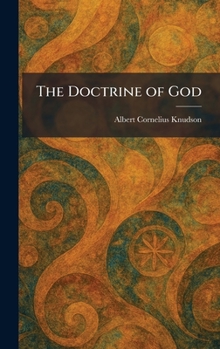
The Doctrine of God

"The Doctrine of God" is a comprehensive and scholarly exploration of the foundational concept of the Divine within Christian systematic theology. Written by Albert C. Knudson, a prominent figure in the school of Personalism, this work provides a rigorous examination of the nature, existence, and attributes of God, blending historical perspective with philosophical inquiry. The book is structured to guide the reader through the evolution of theological thought, addressing both the challenges of modern skepticism and the enduring truths of religious experience.
The text is divided into two major parts: the first focuses on the province of theology and the nature of religious knowledge, while the second delves into the specific doctrine of God. Knudson meticulously analyzes the arguments for theism, the personality of God, and the divine attributes of power, knowledge, and love. By championing a personalistic worldview, the author argues that the personality of the Divine is the most coherent framework for understanding the relationship between the Creator and the universe.
Intellectually stimulating and deeply researched, "The Doctrine of God" remains a significant contribution to religious literature. It serves as an essential resource for students, theologians, and anyone interested in the philosophical underpinnings of Christian doctrine and the historical development of theological ideas.
This work has been selected by scholars as being culturally important, and is part of the knowledge base of civilization as we know it. This work was reproduced from the original artifact, and remains as true to the original work as possible. Therefore, you may see the original copyright references, library stamps (as most of these works have been housed in our most important libraries around the world), and other notations in the work.
This work is in the public domain in the United States of America, and possibly other nations. Within the United States, you may freely copy and distribute this work, as no entity (individual or corporate) has a copyright on the body of the work.
As a reproduction of a historical artifact, this work may contain missing or blurred pages, poor pictures, errant marks, etc. Scholars believe, and we concur, that this work is important enough to be preserved, reproduced, and made generally available to the public. We appreciate your support of the preservation process, and thank you for being an important part of keeping this knowledge alive and relevant.
Customer Reviews
ThriftBooks ® and the ThriftBooks ® logo are registered trademarks of Thrift Books Global, LLC
