


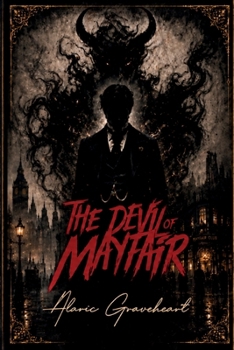
The Devil of Mayfair

A husband's debts belong to his widow. Even the ones not written in money.
London, 1828. Charlotte Fairchild is eight-and-twenty, newly widowed, and a fortnight from ruin. Her husband Edmund was a cautious, forgettable man who left her nothing but what he owed - and, hidden where he thought no one would look, a single black card embossed in gold, bearing the name of a house that sits in no directory and on no map the same way twice.
The House of Fortune keeps its lamps burning while London freezes around it. The cards are fair. The brandy is good. And its proprietor, Lucien Vale - gracious, patient, and not, whatever else he may be, a man - tells only the truth, which is the cruellest thing about him. He already knows the one desire Charlotte has never confessed to a living soul. He will name it for her across the table, and ask, with perfect courtesy, what she is prepared to pay.
She comes to clear a debt. She learns the House takes no payment in coin. It collects in secrets and in souls, in bargains that fall due in blood, and what it does to a defaulter is not a thing the living are built to look upon. Worse: the contract she has inherited binds her by a law colder and older than any statute in England, and no cleverness she owns can argue it away.
Pride keeps her pulling at the thread long after sense says let go. Pride may be all she has left to spend.
Slow-burning, lavishly bleak, and heavy with the dread of a city that has something ancient breathing beneath its stones, The Devil of Mayfair is gothic horror for readers who like their devils soft-spoken, their contracts unbreakable, and their terror patient enough to wait.
Some accounts are settled in gold. Hers will not be.
Customer Reviews
ThriftBooks ® and the ThriftBooks ® logo are registered trademarks of Thrift Books Global, LLC
