


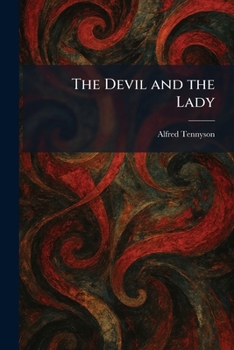
The Devil and the Lady

"The Devil and the Lady" is a remarkable verse drama written by Alfred Lord Tennyson during his early adolescence. Showcasing the precocious talent of the future Poet Laureate, this three-act comedy draws significant inspiration from the Elizabethan and Jacobean theatrical traditions. The plot centers on Magus, an elderly necromancer who, fearing his young wife's potential infidelity during his absence, summons a Devil to guard her virtue. What follows is a clever and humorous exploration of jealousy, deception, and the supernatural.
Despite being written when Tennyson was only fourteen, the play exhibits a sophisticated command of blank verse and a rich, archaic vocabulary that mirrors the works of Shakespeare and Marlowe. It offers a fascinating glimpse into the formative years of one of the nineteenth century's most influential literary figures. Readers will appreciate the sharp wit, the rhythmic beauty of the dialogue, and the imaginative blending of the macabre with the comedic. "The Devil and the Lady" stands as an essential piece for scholars of Victorian literature and admirers of Tennyson's poetic legacy, revealing the early sparks of the genius that would later define an era.
This work has been selected by scholars as being culturally important, and is part of the knowledge base of civilization as we know it. This work was reproduced from the original artifact, and remains as true to the original work as possible. Therefore, you may see the original copyright references, library stamps (as most of these works have been housed in our most important libraries around the world), and other notations in the work.
This work is in the public domain in the United States of America, and possibly other nations. Within the United States, you may freely copy and distribute this work, as no entity (individual or corporate) has a copyright on the body of the work.
As a reproduction of a historical artifact, this work may contain missing or blurred pages, poor pictures, errant marks, etc. Scholars believe, and we concur, that this work is important enough to be preserved, reproduced, and made generally available to the public. We appreciate your support of the preservation process, and thank you for being an important part of keeping this knowledge alive and relevant.
Customer Reviews
ThriftBooks ® and the ThriftBooks ® logo are registered trademarks of Thrift Books Global, LLC
