


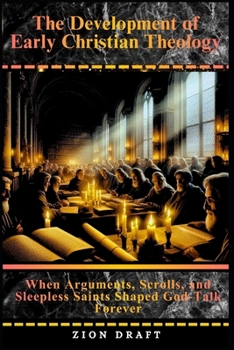
The Development of Early Christian Theology: When Arguments, Scrolls, and Sleepless Saints Shaped God-Talk Forever

THE DEVELOPMENT OF EARLY CHRISTIAN THEOLOGY: WHEN ARGUMENTS, SCROLLS, AND SLEEPLESS SAINTS SHAPED GOD-TALK FOREVER
Christian theology did not descend fully formed-it was argued into existence. In the first centuries after Christ, believers wrestled with urgent questions: Who exactly was Jesus? How could God be one and yet three? What counted as truth, heresy, or faithful belief? This book explores how early Christian theology emerged through debate, persecution, prayer, and an exhausting devotion to getting God-talk right.
From candle-lit rooms and borrowed scrolls to imperial councils that stretched arguments late into the night, thinkers like Athanasius of Alexandria and Augustine of Hippo shaped ideas that still define Christianity today. Readers are guided through pivotal moments such as the Council of Nicaea, where theology became a matter of empire, exile, and survival. These were not abstract philosophers, but pastors, monks, and bishops under pressure-writing, arguing, and praying while the Church itself was still fragile.
Rather than reducing theology to technical terms, this book reveals it as a human struggle to speak faithfully about the divine. The Development of Early Christian Theology shows how disagreement sharpened belief, how sleepless saints defended fragile truths, and how the language forged in those early centuries continues to shape faith, doctrine, and worship across the world today.
Customer Reviews
ThriftBooks ® and the ThriftBooks ® logo are registered trademarks of Thrift Books Global, LLC
