


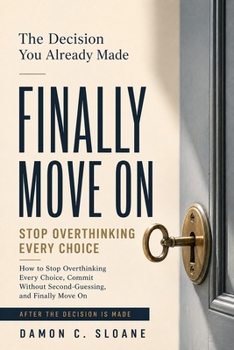
The Decision You Already Made: How to Stop Overthinking Every Choice, Commit Without Second-Guessing, and Finally Move On

Part of you may already know which apartment, which job, which answer. Your attention keeps drifting back to one option. You just won't close, because closing one door means every other door swings shut.
Maybe you lean. Maybe you honestly don't. The book handles both, and shows you how to tell which one you're in. And if you've spent so long keeping everyone else happy that you've lost track of what you want, the book has a chapter for that.
So the listing stays open on your phone, the one your thumb keeps finding its way back to, the way a tongue finds a sore tooth. The new information stopped changing your mind. You're circling.
Leaving it open has a cost, even when you're not looking at it. It just looks like diligence.
This isn't "trust your gut," and the book is honest about which famous studies don't hold up, "sleep on it" among them. What does hold: in studies by Dan Gilbert and Jane Ebert, people who could still reverse their choice tended to be less satisfied with it.
The method, in one sentence: you have already decided; your job is to read it, close it, act on it, and defend it.
The return test: the thing you keep reopening is usually the thing you want. How to check whether you're going back out of want or dread, then the coin trick, told honestly. Read the lean. Never worship it.When you genuinely don't know yet: what it means when you keep returning to both options, or to neither, and what to do without forcing one.Close it, then act: committing, more than the perfect pick, is what lets satisfaction come. Then get it out of your head and onto the ground with a concrete first action.Defend the door: reopen for genuinely new information, not for the old fear wearing a new coat.The regret you're afraid of is the loud kind, and it usually fades. The one that tends to last is the silent one: the chance you never took.For the capable over-decider who can handle everyone else's hard problems but not their own choices. For the one who got so good at reading the room they forgot to read themselves. For anyone who has stood in front of the bread and called it being thorough.
You may already know which room. Stop standing in the doorway.
Related Subjects
Business Business & Investing Psychology Self Help Self-Help Self-Help & PsychologyCustomer Reviews
ThriftBooks ® and the ThriftBooks ® logo are registered trademarks of Thrift Books Global, LLC
