


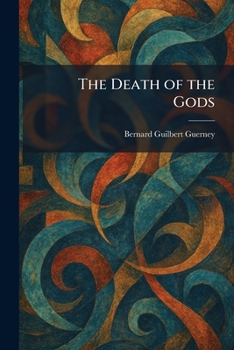
The Death of the Gods

"The Death of the Gods" is a sweeping historical novel that explores the spiritual and cultural collision between the dying pagan world and the rise of Christianity. Set in the fourth century, the narrative follows the life and reign of Emperor Julian, known to history as Julian the Apostate. As Julian attempts to restore the ancient Olympian gods and roll back the growing influence of the Christian faith, he finds himself caught in a profound struggle between two incompatible worldviews: the Hellenistic ideal of beauty and the ascetic promise of the New Testament.
Through vivid prose and meticulous historical detail, the work portrays Julian not merely as a political figure, but as a tragic hero driven by a visionary quest to revive the grandeur of classical antiquity. The novel examines themes of religious fanaticism, the nature of power, and the eternal conflict between the flesh and the spirit. As a significant entry in the genre of historical fiction, "The Death of the Gods" remains a landmark of psychological depth, offering a compelling portrait of a man standing at the crossroads of history, desperately fighting to preserve a world that has already begun to fade.
This work has been selected by scholars as being culturally important, and is part of the knowledge base of civilization as we know it. This work was reproduced from the original artifact, and remains as true to the original work as possible. Therefore, you may see the original copyright references, library stamps (as most of these works have been housed in our most important libraries around the world), and other notations in the work.
This work is in the public domain in the United States of America, and possibly other nations. Within the United States, you may freely copy and distribute this work, as no entity (individual or corporate) has a copyright on the body of the work.
As a reproduction of a historical artifact, this work may contain missing or blurred pages, poor pictures, errant marks, etc. Scholars believe, and we concur, that this work is important enough to be preserved, reproduced, and made generally available to the public. We appreciate your support of the preservation process, and thank you for being an important part of keeping this knowledge alive and relevant.
Customer Reviews
ThriftBooks ® and the ThriftBooks ® logo are registered trademarks of Thrift Books Global, LLC
