


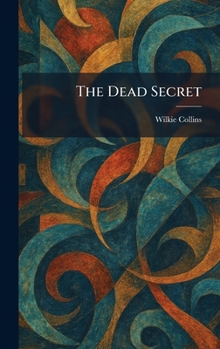
The Dead Secret


Select Format
Select Condition 
Book Overview
"The Dead Secret" is a gripping masterpiece of Victorian sensation fiction written by Wilkie Collins. The narrative centers on Rosamond Treverton, who inadvertently discovers a long-buried family secret that threatens her inheritance and her social standing. The mystery begins with a deathbed confession and a hidden letter, setting in motion a series of events that lead Rosamond back to the ancestral home of Porthgenna Tower.
Set against the atmospheric and rugged landscape of the Cornish coast, the novel masterfully blends elements of Gothic suspense with a domestic mystery. As Rosamond and her blind husband, Leonard, navigate the decaying rooms of their estate, they uncover truths about her parentage that have been suppressed for decades. Collins explores themes of illegitimacy, social class, and the moral consequences of deception, all while maintaining a relentless pace and a sense of impending dread.
Renowned for its intricate plotting and psychological depth, "The Dead Secret" remains a significant work in the evolution of the detective genre. It highlights Collins's skill in transforming domestic anxieties into a thrilling narrative, making it an essential read for fans of classic nineteenth-century literature and suspense.
This work has been selected by scholars as being culturally important, and is part of the knowledge base of civilization as we know it. This work was reproduced from the original artifact, and remains as true to the original work as possible. Therefore, you may see the original copyright references, library stamps (as most of these works have been housed in our most important libraries around the world), and other notations in the work.
This work is in the public domain in the United States of America, and possibly other nations. Within the United States, you may freely copy and distribute this work, as no entity (individual or corporate) has a copyright on the body of the work.
As a reproduction of a historical artifact, this work may contain missing or blurred pages, poor pictures, errant marks, etc. Scholars believe, and we concur, that this work is important enough to be preserved, reproduced, and made generally available to the public. We appreciate your support of the preservation process, and thank you for being an important part of keeping this knowledge alive and relevant.
Customer Reviews
Absolutely a great Novel
Terrific mystery novel!
Enjoyable Mr. Collins
Entertaining as usual
Charming Predecessor to _The Woman in White_.
ThriftBooks ® and the ThriftBooks ® logo are registered trademarks of Thrift Books Global, LLC
