


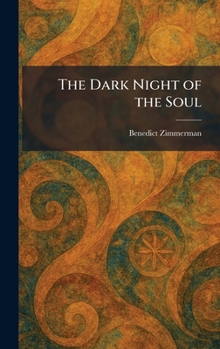
The Dark Night of the Soul

"The Dark Night of the Soul" is a profound masterpiece of Christian mysticism and spiritual theology. This classic treatise explores the arduous yet transformative journey of the human soul as it seeks divine union with God. Written with poetic intensity and deep psychological insight, the work delineates the stages of spiritual purgation-the 'dark night of the senses' and the 'dark night of the spirit'-through which the believer must pass to achieve ultimate enlightenment and intimacy with the Divine.
Guided by Benedict Zimmerman's scholarly oversight, this text presents essential teachings on the necessity of detachment, faith, and love in the face of spiritual desolation. The work serves as both a practical guide for those experiencing periods of spiritual dryness and a sublime exploration of the soul's inner workings. Its enduring relevance lies in its ability to articulate the universal human struggle for meaning and the transcendence of earthly suffering. "The Dark Night of the Soul" remains an indispensable resource for scholars of Catholic theology, practitioners of contemplative prayer, and anyone seeking a deeper understanding of the mystical tradition.
This work has been selected by scholars as being culturally important, and is part of the knowledge base of civilization as we know it. This work was reproduced from the original artifact, and remains as true to the original work as possible. Therefore, you may see the original copyright references, library stamps (as most of these works have been housed in our most important libraries around the world), and other notations in the work.
This work is in the public domain in the United States of America, and possibly other nations. Within the United States, you may freely copy and distribute this work, as no entity (individual or corporate) has a copyright on the body of the work.
As a reproduction of a historical artifact, this work may contain missing or blurred pages, poor pictures, errant marks, etc. Scholars believe, and we concur, that this work is important enough to be preserved, reproduced, and made generally available to the public. We appreciate your support of the preservation process, and thank you for being an important part of keeping this knowledge alive and relevant.
Customer Reviews
ThriftBooks ® and the ThriftBooks ® logo are registered trademarks of Thrift Books Global, LLC
