


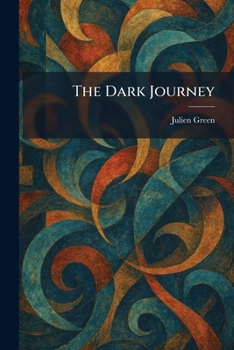
The Dark Journey

"The Dark Journey" is a profound psychological novel that explores the depths of human obsession, despair, and the stifling atmosphere of provincial life. Set in a small French town, the narrative follows Paul Gu ret, a tutor trapped in a loveless marriage whose life begins to unravel when he develops an all-consuming fixation on a young laundry girl named Ang le. As his pursuit turns into a violent desperation, the story weaves together the lives of various inhabitants, revealing a web of isolation and repressed desires.
Julien Green's masterful prose delves into the darker corners of the human psyche, painting a haunting portrait of characters driven by impulses they can neither understand nor control. The work is celebrated for its atmospheric intensity and its unflinching look at the consequences of unrequited passion and moral decay. A significant achievement in early 20th-century literature, "The Dark Journey" remains a powerful exploration of the shadows that reside within the human heart and the tragic intersections of fate and desire.
This work has been selected by scholars as being culturally important, and is part of the knowledge base of civilization as we know it. This work was reproduced from the original artifact, and remains as true to the original work as possible. Therefore, you may see the original copyright references, library stamps (as most of these works have been housed in our most important libraries around the world), and other notations in the work.
This work is in the public domain in the United States of America, and possibly other nations. Within the United States, you may freely copy and distribute this work, as no entity (individual or corporate) has a copyright on the body of the work.
As a reproduction of a historical artifact, this work may contain missing or blurred pages, poor pictures, errant marks, etc. Scholars believe, and we concur, that this work is important enough to be preserved, reproduced, and made generally available to the public. We appreciate your support of the preservation process, and thank you for being an important part of keeping this knowledge alive and relevant.
Customer Reviews
ThriftBooks ® and the ThriftBooks ® logo are registered trademarks of Thrift Books Global, LLC
