


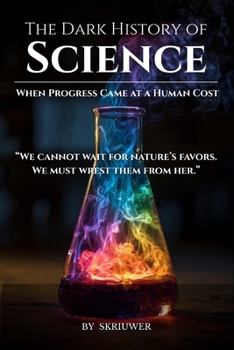
The Dark History of Science: When Progress Came at a Human Cost

Science has given us vaccines, electricity, and space travel. But the road to progress wasn't always clean. Behind many of the discoveries we celebrate today are stories of unethical experiments, stolen credit, and human suffering that rarely make it into the textbooks.
This book looks at the darker chapters in the history of science -- the moments when the pursuit of knowledge came at a real human cost. From Nazi medical experiments and Cold War radiation tests to the exploitation of marginalized communities in the name of research, it covers the cases that shaped modern ethics rules for a reason. It's not anti-science -- it's a reminder that how we get answers matters just as much as the answers themselves.
What's inside:
The Tuskegee syphilis study and other experiments conducted on people without their knowledge or consentNazi doctors, Unit 731, and the horrific research programs of World War IICold War-era radiation experiments on soldiers, prisoners, and unsuspecting civiliansThe scientists who stole credit, falsified data, or buried inconvenient resultsHow these abuses led to the ethical frameworks that govern research todayReader review:
"Really eye-opening. I knew about Tuskegee but had no idea how widespread unethical experiments were, especially during the Cold War. The book covers tough material but handles it respectfully. Hard to put down." -- Angela W.
If you're interested in the side of scientific history that doesn't get talked about enough, this book lays out the facts clearly and lets you see how far we've come -- and how recently some of these things were still happening.
Order your copy today.
Related Subjects
Philosophy Political Science Politics & Social Sciences Social Science Social SciencesCustomer Reviews
ThriftBooks ® and the ThriftBooks ® logo are registered trademarks of Thrift Books Global, LLC
