


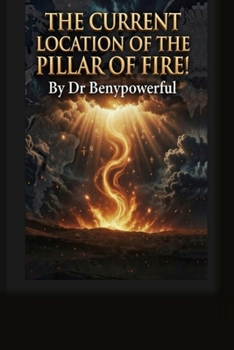
The Current Location of the Pillar of Fire

Where is the Pillar of Fire today? This is not merely a historical question-it is the most vital question for every generation of believers. The עַמּוּד הָאֵשׁ (Ammūd hā'ēsh, 'pillar of fire' in Hebrew), the στύλος πυρός (st los pyr s in Greek), and the עַמּוּדָא דְנוּרָא (Ammūdā' dənūrā' in Aramaic) is not a symbol-it is the manifest, tangible, visible glory of the living God. This treatise traces the movement of that glory from the wilderness of Sinai through the tabernacle, the temple, the person of Yeshua HaMashiach, the Body of believers, and into the final consummation of the New Jerusalem.
The Shekinah (שְׁכִינָה, Shəkhīnāh) is from the Hebrew root שָׁכַן (shākhan, 'to dwell, to tabernacle'). Though the word 'Shekinah' does not appear in Scripture as a single term, its reality pervades every page. It is the dwelling presence of God-His kavod (כָּבוֹד, glory), His doxa (δόξα, glory in Greek)-made visible, tangible, and experiential among His people.
This exposition follows the Pillar of Fire through six distinct movements, each representing a relocation of the manifest glory of God. The fire has never been extinguished. It has moved.
The Hebrew word for 'pillar' is עַמּוּד (ammūd), from the root עמד ('āmad), meaning 'to stand, to take one's stand, to remain, to endure.' The Pillar is not a passing phenomenon-it is God's enduring stance in the earth. When the Pillar appears, God is taking His stand. When the fire falls, heaven is making a declaration: 'I am here. I am not leaving. I am standing with My people.'
In the Greek Septuagint (LXX), the pillar of fire is rendered στύλος πυρός (st los pyr s). The word στύλος (st los) carries the sense of a pillar, column, or support-a structural foundation. In Galatians 2:9, Paul calls James, Cephas, and John 'pillars' (στύλοι, st loi) of the Church. In 1 Timothy 3:15, the Church is called the 'pillar and ground of the truth' (στύλος καὶ ἑδραίωμα τῆς ἀληθείας). The Pillar of Fire is thus not only the visible glory-it is the structural support of all truth in the earth.
In the Aramaic Peshitta, the pillar of fire is עַמּוּדָא דְנוּרָא (Ammūdā' dənūrā'). The Aramaic נוּר (nūr) is the word used in Daniel 7:9-10 for the fiery throne of the Ancient of Days and the river of fire flowing before Him. In Daniel 3:25, when the fourth figure appears in the furnace, the text says he was walking in the midst of the נוּרָא (nūrā', fire). The Aramaic word thus connects the Pillar of Fire directly to the throne of God, the furnace of trial, and the person of Christ.
This treatise demonstrates that the Pillar of Fire has relocated six times in redemptive history: (1) from heaven to the wilderness; (2) from the wilderness to the tabernacle; (3) from the tabernacle to the temple; (4) from the temple into the person of Christ; (5) from Christ into the Church by the Spirit; and (6) in the final consummation, into the New Jerusalem where God's glory is the very atmosphere of eternal existence. At each relocation, the fire did not diminish-it expanded. At each new dwelling, the glory increased. The current location of the Pillar of Fire is inside every Spirit-filled believer-and its final destination is everywhere.
Customer Reviews
ThriftBooks ® and the ThriftBooks ® logo are registered trademarks of Thrift Books Global, LLC
