


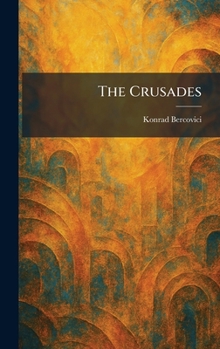
The Crusades

"The Crusades" by Konrad Bercovici is a compelling historical narrative that explores the tumultuous series of religious wars waged between the 11th and 13th centuries. Bercovici examines the complex interplay of faith, power, and greed that drove European monarchs and commoners alike toward the Holy Land. The work provides a detailed account of the major expeditions, the rise and fall of the Latin Kingdom of Jerusalem, and the enduring impact of these conflicts on both the Western and Eastern worlds.
By blending rigorous historical detail with a narrative flair, the author brings to life the legendary figures of the era-from Richard the Lionheart to Saladin-and describes the brutal sieges, diplomatic maneuvers, and cultural exchanges that defined the age. This book serves as a vital resource for readers interested in medieval history, providing insight into how the Crusades shaped the geopolitical and religious landscape of the Mediterranean for centuries to come. It captures the fervor of the era while analyzing the social and economic motivations behind the quest for the Levant.
This work has been selected by scholars as being culturally important, and is part of the knowledge base of civilization as we know it. This work was reproduced from the original artifact, and remains as true to the original work as possible. Therefore, you may see the original copyright references, library stamps (as most of these works have been housed in our most important libraries around the world), and other notations in the work.
This work is in the public domain in the United States of America, and possibly other nations. Within the United States, you may freely copy and distribute this work, as no entity (individual or corporate) has a copyright on the body of the work.
As a reproduction of a historical artifact, this work may contain missing or blurred pages, poor pictures, errant marks, etc. Scholars believe, and we concur, that this work is important enough to be preserved, reproduced, and made generally available to the public. We appreciate your support of the preservation process, and thank you for being an important part of keeping this knowledge alive and relevant.
Customer Reviews
ThriftBooks ® and the ThriftBooks ® logo are registered trademarks of Thrift Books Global, LLC
