


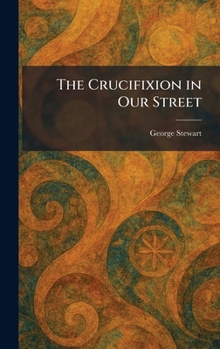
The Crucifixion in Our Street

"The Crucifixion in Our Street" is an evocative and profound examination of the Passion of Christ as it relates to the complexities of modern life. George Stewart presents a series of reflections that seek to find the spiritual significance of the crucifixion within the everyday experiences of contemporary humanity. Rather than treating the events of Calvary as mere history, the work encourages readers to see the ongoing cycle of sacrifice, suffering, and redemption occurring in their own neighborhoods and social structures.
The narrative emphasizes the Social Gospel, focusing on the ethical demands placed upon the faithful to address injustice and hardship. By connecting the divine sacrifice to the struggles of the common man, Stewart creates a compelling bridge between traditional theology and social activism. The book explores themes of empathy, communal responsibility, and the presence of the sacred in the mundane. This work remains a powerful testament to the application of Christian principles to social problems, offering a vision of faith that is both deeply personal and widely transformative.
This work has been selected by scholars as being culturally important, and is part of the knowledge base of civilization as we know it. This work was reproduced from the original artifact, and remains as true to the original work as possible. Therefore, you may see the original copyright references, library stamps (as most of these works have been housed in our most important libraries around the world), and other notations in the work.
This work is in the public domain in the United States of America, and possibly other nations. Within the United States, you may freely copy and distribute this work, as no entity (individual or corporate) has a copyright on the body of the work.
As a reproduction of a historical artifact, this work may contain missing or blurred pages, poor pictures, errant marks, etc. Scholars believe, and we concur, that this work is important enough to be preserved, reproduced, and made generally available to the public. We appreciate your support of the preservation process, and thank you for being an important part of keeping this knowledge alive and relevant.
Customer Reviews
ThriftBooks ® and the ThriftBooks ® logo are registered trademarks of Thrift Books Global, LLC
