


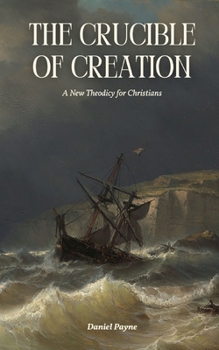
The Crucible of Creation: A New Theodicy for Christians

Why does a loving God permit suffering? This ancient question has challenged Christian faith for two millennia, generating sophisticated theological responses that often satisfy the mind while leaving the heart unconvinced. Drawing on insights from evolutionary biology, process philosophy, and trinitarian theology, Daniel Payne proposes a revolutionary approach that understands creation itself as divine experimentation in value-realization-a cosmic crucible where suffering emerges as an inevitable byproduct of genuine creativity rather than a problem requiring justification.
The Crucible of Creation: A New Theodicy for Christians challenges traditional assumptions about divine immutability and omnipotence while preserving core Christian commitments about incarnate love and redemptive hope. Through rigorous engagement with classical and contemporary theodicies, scientific discoveries about cosmic development, and comparative religious perspectives, Payne demonstrates how experimental theology provides more adequate resources for understanding both the reality of gratuitous evil and the possibility of ultimate meaning.
This groundbreaking work offers fresh perspectives for scholars grappling with theodicy's intellectual challenges, pastors seeking honest approaches to congregational suffering, and thoughtful believers wrestling with faith's relationship to life's inevitable tragedies. Neither minimizing evil's reality nor abandoning hope for divine goodness, Crucible Theodicy charts new territory in the ongoing conversation between faith and suffering.
Customer Reviews
ThriftBooks ® and the ThriftBooks ® logo are registered trademarks of Thrift Books Global, LLC
