


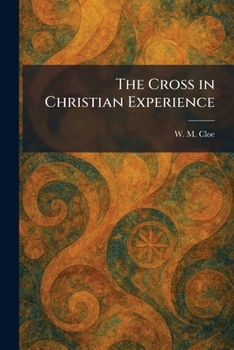
The Cross in Christian Experience

Select Format
Select Condition 
Book Overview
"The Cross in Christian Experience" is a profound theological exploration into the central symbol of the Christian faith and its practical application in the life of the believer. Written by W.M. Cloe, B.D., with both academic rigor and spiritual sensitivity, this work examines the multifaceted significance of the cross, moving beyond mere historical analysis to address its transformative power in personal experience.
Throughout the text, the author delves into themes of redemption, sacrifice, and the emotional and spiritual resonance of the crucifixion. By examining how the message of the cross informs daily living, Cloe provides readers with a roadmap for deepening their devotional life and understanding the core tenets of Christian doctrine. This volume serves as a timeless resource for students of theology, clergy, and laypeople seeking a more intimate connection with the foundational mysteries of their faith.
Combining scriptural insight with a keen understanding of the human condition, "The Cross in Christian Experience" remains a compelling study of how an ancient event continues to shape modern identity and purpose. It is an essential read for anyone looking to bridge the gap between abstract theology and the lived reality of a committed Christian walk.
This work has been selected by scholars as being culturally important, and is part of the knowledge base of civilization as we know it. This work was reproduced from the original artifact, and remains as true to the original work as possible. Therefore, you may see the original copyright references, library stamps (as most of these works have been housed in our most important libraries around the world), and other notations in the work.
This work is in the public domain in the United States of America, and possibly other nations. Within the United States, you may freely copy and distribute this work, as no entity (individual or corporate) has a copyright on the body of the work.
As a reproduction of a historical artifact, this work may contain missing or blurred pages, poor pictures, errant marks, etc. Scholars believe, and we concur, that this work is important enough to be preserved, reproduced, and made generally available to the public. We appreciate your support of the preservation process, and thank you for being an important part of keeping this knowledge alive and relevant.
Customer Reviews
ThriftBooks ® and the ThriftBooks ® logo are registered trademarks of Thrift Books Global, LLC
