


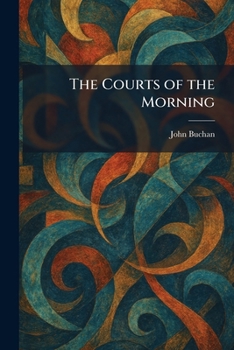
The Courts of the Morning

"The Courts of the Morning" is a high-stakes adventure novel by the celebrated master of suspense, John Buchan. Set in the fictional South American republic of Olifa, the story follows the charismatic Sandy Arbuthnot-a recurring hero in Buchan's literary universe-as he investigates a mysterious and powerful organization known as the Courts of the Morning. Led by the enigmatic and brilliant Castor, this shadow government seeks to exert global influence through economic manipulation and social engineering.
As Arbuthnot and his allies, including Archie Roylance, become deeply embedded in the volatile political landscape of Olifa, they must navigate a world of treacherous mountain passes, hidden fortresses, and brewing revolution. The narrative blends elements of the political thriller with epic military strategy, showcasing Buchan's profound understanding of geopolitics and human nature. Far from a simple tale of espionage, the work explores themes of leadership, the ethics of power, and the clash between industrial efficiency and traditional liberty.
Renowned for its vivid descriptions of the rugged South American wilderness and its intricate plotting, "The Courts of the Morning" remains a classic of early 20th-century adventure fiction. It offers a gripping exploration of international intrigue and the enduring spirit of heroism in the face of modern tyranny.
This work has been selected by scholars as being culturally important, and is part of the knowledge base of civilization as we know it. This work was reproduced from the original artifact, and remains as true to the original work as possible. Therefore, you may see the original copyright references, library stamps (as most of these works have been housed in our most important libraries around the world), and other notations in the work.
This work is in the public domain in the United States of America, and possibly other nations. Within the United States, you may freely copy and distribute this work, as no entity (individual or corporate) has a copyright on the body of the work.
As a reproduction of a historical artifact, this work may contain missing or blurred pages, poor pictures, errant marks, etc. Scholars believe, and we concur, that this work is important enough to be preserved, reproduced, and made generally available to the public. We appreciate your support of the preservation process, and thank you for being an important part of keeping this knowledge alive and relevant.
Customer Reviews
ThriftBooks ® and the ThriftBooks ® logo are registered trademarks of Thrift Books Global, LLC
