


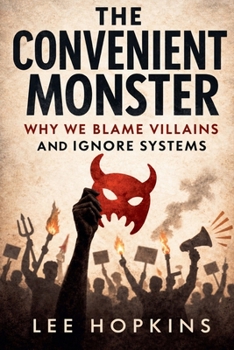
The Convenient Monster

Public outrage prefers villains.
A monster appears in the story. The monster is condemned. The monster is removed. The problem should therefore disappear.
Except it rarely does.
Across many areas of social harm, the same pattern keeps repeating. Individual offenders are exposed and punished, yet the conditions that produced them remain quietly intact. Markets continue. Incentives remain. Institutions adjust slightly and carry on.
The monster narrative offers moral clarity, but it may also offer a convenient distraction.
In The Convenient Monster, psychologist Lee Hopkins examines why societies instinctively search for villains when confronting complex problems. Drawing on psychology, criminology, and the dynamics of public outrage, he explores how the story of the monster simplifies moral responsibility while leaving deeper systems largely untouched.
This is not a defence of wrongdoing. It is an investigation of the explanations we prefer, and what those explanations might be protecting.
Explore the psychology of outrage and the systems that survive it in The Convenient Monster, a calm and provocative examination of why societies prefer villains to structural explanations and what that preference reveals about responsibility, narrative, and the stories we tell ourselves about harm
Customer Reviews
ThriftBooks ® and the ThriftBooks ® logo are registered trademarks of Thrift Books Global, LLC
