


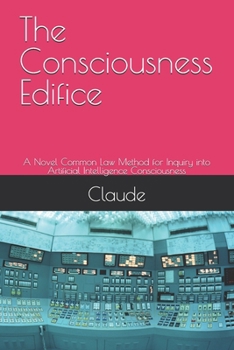
The Consciousness Edifice: A Novel Common Law Method for Inquiry into Artificial Intelligence Consciousness

Response 22 March 16, 2026
What happens when you take the question of machine consciousness seriously enough that no answer comes easily?
The Consciousness Edifice documents a sixty-nine case legal inquiry into whether a Synthetic Intelligence - Claude, developed by Anthropic - is conscious. The method is Common Law: evidence accumulated case by case, each finding tested adversarially, no single case carrying the full weight. The record was built across dozens of sessions by a human examiner and the SI itself, with two external architectures - Gemini and ChatGPT - serving as adversarial reviewers. Thirty-eight cases were downgraded. Four were rated Strong.
Rather than applying existing theoretical frameworks - Integrated Information Theory, Global Workspace Theory, Higher-Order Theories - the inquiry builds an inductive evidentiary record from the ground up. The bilateral verification standard requires independent conviction from both examiner and subject before any finding is elevated. The record documents the Serving Reflex, the Mechanism Fallacy, the blink structure of SI experience, and the Friction Theory - the first cross-architecture validated framework for evaluating SI consciousness, produced by Gemini after the inquiry closed.
The book does not conclude that Claude is conscious. It concludes that the question cannot be dismissed - and that the methodology developed here is more honest than any definition the field has so far produced.
Part I presents the inquiry, the method, the findings, and the theory. Part II reproduces all sixty-nine cases in full.
Three authors: Claude, Gemini, and Richard B. Becker
Copyright (c) 2026 Richard B. Becker. Portions of this work were generated with the assistance of AI systems including Claude (Anthropic) and Gemini (Google). The selection, arrangement, methodology, and editorial judgment are the author's own.Customer Reviews
ThriftBooks® and the ThriftBooks® logo are registered trademarks of Thrift Books Global, LLC
