


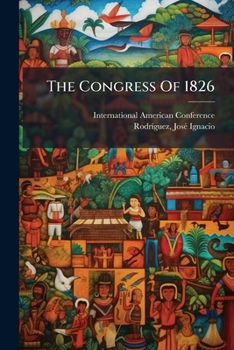
The Congress Of 1826

"The Congress Of 1826" delves into the historical significance of the assembly held in Panama, a pivotal moment in the early development of inter-American relations. Convened at the invitation of Sim n Bol var, the congress aimed to foster unity and cooperation among the newly independent nations of Latin America. This work explores the ambitious goals of the congress, including the establishment of a common defense pact, the resolution of territorial disputes, and the promotion of trade and diplomatic ties.
Authored by key figures involved in the First International American Conference (1889-1890), with contributions from Jos Ignacio Rodr guez, this book offers valuable insights into the challenges and opportunities faced by the nascent republics of the Americas. It examines the influence of the Monroe Doctrine and the evolving relationship between the United States and Latin America, shedding light on the complex dynamics that shaped the region's political landscape in the 19th century. A vital resource for historians and anyone interested in the roots of Pan-Americanism and the history of international diplomacy.
This work has been selected by scholars as being culturally important, and is part of the knowledge base of civilization as we know it. This work was reproduced from the original artifact, and remains as true to the original work as possible. Therefore, you will see the original copyright references, library stamps (as most of these works have been housed in our most important libraries around the world), and other notations in the work.
This work is in the public domain in the United States of America, and possibly other nations. Within the United States, you may freely copy and distribute this work, as no entity (individual or corporate) has a copyright on the body of the work.
As a reproduction of a historical artifact, this work may contain missing or blurred pages, poor pictures, errant marks, etc. Scholars believe, and we concur, that this work is important enough to be preserved, reproduced, and made generally available to the public. We appreciate your support of the preservation process, and thank you for being an important part of keeping this knowledge alive and relevant.
Customer Reviews
ThriftBooks® and the ThriftBooks® logo are registered trademarks of Thrift Books Global, LLC
