


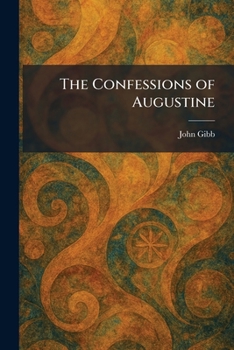
The Confessions of Augustine

Select Format
Select Condition 
Book Overview
"The Confessions of Augustine" stands as one of the most influential works in Western literature and Christian theology. Written in the late 4th century by St. Augustine of Hippo, this deeply personal narrative details his spiritual journey from a youth marked by restlessness and philosophical searching to his ultimate conversion to Christianity. The work serves both as a sincere prayer of repentance and a rigorous intellectual exploration of the nature of God, time, and memory.
Divided into thirteen books, the text explores Augustine's early life, his struggles with Manichaeism and Neoplatonism, and the transformative moment of his baptism. Beyond its biographical elements, "The Confessions of Augustine" offers profound theological insights that helped shape the doctrine of the Western Church. It remains a foundational text for understanding the intersection of faith and reason, as well as the psychological complexities of the human condition. This enduring masterpiece continues to resonate with readers seeking to understand the evolution of Christian thought and the universal quest for spiritual truth.
This work has been selected by scholars as being culturally important, and is part of the knowledge base of civilization as we know it. This work was reproduced from the original artifact, and remains as true to the original work as possible. Therefore, you may see the original copyright references, library stamps (as most of these works have been housed in our most important libraries around the world), and other notations in the work.
This work is in the public domain in the United States of America, and possibly other nations. Within the United States, you may freely copy and distribute this work, as no entity (individual or corporate) has a copyright on the body of the work.
As a reproduction of a historical artifact, this work may contain missing or blurred pages, poor pictures, errant marks, etc. Scholars believe, and we concur, that this work is important enough to be preserved, reproduced, and made generally available to the public. We appreciate your support of the preservation process, and thank you for being an important part of keeping this knowledge alive and relevant.
Customer Reviews
ThriftBooks ® and the ThriftBooks ® logo are registered trademarks of Thrift Books Global, LLC
