


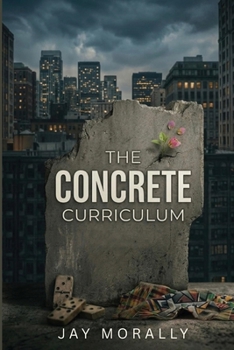
The Concrete Curriculum

In The Concrete Curriculum, Jay Morally delivers a striking collection of flash fiction that explores the lessons life teaches far beyond any classroom. Set across Brixton, Lewisham, and the wider streets of South London, these stories follow individuals navigating pressure, identity, loyalty, and the quiet search for meaning in environments that rarely offer softness.
Each chapter captures a defining moment. A boy steps into the streets to earn respect and nearly loses his life, only to discover a different path through art and self-worth. Two young men form a brotherhood through shared struggle and slowly rebuild their futures piece by piece. A friendship tested in the shadow of illness reveals a deeper truth about love, one that challenges everything they were taught about masculinity and connection. Across estates, schools, hospitals, and homes, lives unfold with honesty and emotional weight.
Jay Morally writes with clarity and restraint, allowing each story to breathe. There is no excess, only truth. The characters are not distant or idealised. They feel real, shaped by absence, expectation, and the constant tension between survival and growth. Some seek validation. Some walk away from it. Others learn that being seen is not the same as being valued.
Themes of brotherhood, self-worth, healing, and emotional courage run through every page. Young men learn that strength is not always loud. Women reclaim their identity in spaces that once reduced them. Communities reveal both their fractures and their ability to hold people together when it matters most. Even the smallest gestures, a conversation, a moment of care, a quiet decision, can alter the course of a life.
These are not stories of perfection or easy redemption. Change is slow, often uncomfortable, and sometimes incomplete. Yet within that struggle lies growth. Within that growth lies truth. And within that truth lies a kind of love that is steady, resilient, and real.
The Concrete Curriculum is a deeply human exploration of what it means to endure, to reflect, and to evolve. It invites the reader to pause and consider the lessons they carry, the ones they have resisted, and the ones still waiting to be learned.
Customer Reviews
ThriftBooks ® and the ThriftBooks ® logo are registered trademarks of Thrift Books Global, LLC
