


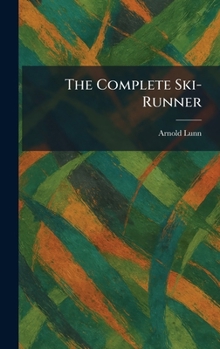
The Complete Ski-Runner

Select Format
Select Condition 
Book Overview
"The Complete Ski-Runner" is a seminal work by Sir Arnold Lunn, one of the most influential figures in the history of competitive skiing. This comprehensive volume provides an in-depth exploration of the art and science of skiing during the sport's formative years. Lunn, a pioneer who played a critical role in the development of the slalom and downhill races, covers a wide range of topics including fundamental techniques, the evolution of equipment, and the nuances of mountain navigation.
The text offers significant historical insight into the transition of skiing from a practical mode of transport to a popular leisure activity and elite competitive sport. It serves as an essential resource for those interested in the heritage of winter sports and the early developments of ski culture in the Alps and beyond. Through detailed instructions and insightful commentary, "The Complete Ski-Runner" captures the spirit of adventure and the technical rigor that defined early 20th-century alpinism. This work remains a valuable reference for understanding the roots of modern skiing and the enduring appeal of the mountains.
This work has been selected by scholars as being culturally important, and is part of the knowledge base of civilization as we know it. This work was reproduced from the original artifact, and remains as true to the original work as possible. Therefore, you may see the original copyright references, library stamps (as most of these works have been housed in our most important libraries around the world), and other notations in the work.
This work is in the public domain in the United States of America, and possibly other nations. Within the United States, you may freely copy and distribute this work, as no entity (individual or corporate) has a copyright on the body of the work.
As a reproduction of a historical artifact, this work may contain missing or blurred pages, poor pictures, errant marks, etc. Scholars believe, and we concur, that this work is important enough to be preserved, reproduced, and made generally available to the public. We appreciate your support of the preservation process, and thank you for being an important part of keeping this knowledge alive and relevant.
Customer Reviews
ThriftBooks ® and the ThriftBooks ® logo are registered trademarks of Thrift Books Global, LLC
