


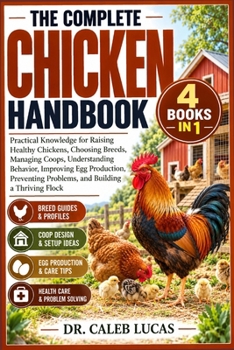
The Complete Chicken Handbook: Practical Knowledge for Raising Healthy Chickens, Choosing Breeds, Managing Coops, Understanding Behavior, Improving Eg
No Customer Reviews

K
eeping chickens can be one of the most rewarding forms of animal
care. Whether you are raising a small backyard flock, caring for
chickens as companion animals, collecting eggs, developing a
breeding program, or simply enjoying the presence of these intelligent and
entertaining birds, good results begin with good care.
A healthy flock does not happen by accident. Chickens need suitable
housing, appropriate food and clean water, protection from predators and
dangerous weather, regular observation, hygienic surroundings, opportu
nities to express natural behaviors, and calm, respectful handling. They
also benefit from caretakers who learn to notice small changes before they
become larger concerns.
This handbook is designed to make that learning process easier.
The breeds featured throughout this collection include Rhode Island
Reds, Leghorns, Plymouth Rocks, Silkies, Orpingtons, Sussex, Australorps,
Wyandottes, Cochins, Brahmas, Marans, Polish, Hamburgs, Jersey Giants,
and many other breeds. Although all domestic chickens share funda
mental needs, individual breeds can differ considerably in size, activity
level, feathering, temperament, environmental tolerance, and management
requirements.
2Chapter 1 - The Complete Chicken Handbook: Understanding the...
The goal is not simply to tell you what to do. It is to help you understand
why practical care routines matter and how to adapt them to the birds in
front of you.
1.1 What This Chicken Handbook Covers
This handbook is intended to serve as a practical reference from the moment
you begin considering chickens through the many years of caring for an
established flock.
You will learn about housing, feeding, daily routines, hygiene, safe
handling, grooming, behavior, enrichment, health observation, flock
management, breeding considerations, emergency preparedness, and
responsible long-term ownership.
The most useful way to approach chicken care is to think about it as a
collection of daily habits rather than a series of complicated tasks.
For example, a simple morning routine might include:
1. Observe the flock before entering the coop.
2. Check that all birds appear alert and active.
3. Make sure clean drinking water is available.
4. Provide the appropriate feed.
5. Inspect the coop and run for damage or hazards.
6. Look for signs that a bird may be separated, unusually quiet, limping,
struggling to move, or behaving differently.
7. Remove obvious sources of contamination or unsafe debris.
This does not need to take a long time once you become familiar with your
flock.
The important part is consistency.
3THE COMPLETE CHICKEN HANDBOOK
Housing and Environment
A chicken's environment influences nearly every aspect of its daily life. The
coop should provide protection from predators and weather while allowing
adequate ventilation and comfortable resting space.
Good housing should include secure doors and openings, suitable perches,
clean nesting areas, dry bedding, and enough space for birds to move
without constant crowding.
Ventilation deserves particular attention. Fresh air helps control moisture
and keeps the coop more comfortable, but ventilation should not mean
exposing chickens to strong drafts directly at their resting level.
The outdoor run should also be inspected regularly. Look for holes, loose
fencing, sharp objects, unstable structures, standing water, or other hazards.
Remember that chickens are curious animals. If something can be pecked,
scratched, climbed, or knocked over, they may investigate it.
Feeding and Water
Feeding chickens responsibly means providing an appropriate diet for their
age and purpose and making clean water available consistently.
Format:Paperback
Language:English
ISBN:B0HMSFBRWP
ISBN13:9798161747452
Release Date:October 2026
Publisher:Independently Published
Length:316 Pages
Weight:0.93 lbs.
Dimensions:0.7" x 6.0" x 9.0"
Customer Reviews
0 rating
Copyright © 2026 Thriftbooks.com
Terms of Use | Privacy Policy | Do Not Sell/Share My Personal Information | Cookie Notice | Cookie Preferences | Accessibility Statement
ThriftBooks ® and the ThriftBooks ® logo are registered trademarks of Thrift Books Global, LLC
ThriftBooks ® and the ThriftBooks ® logo are registered trademarks of Thrift Books Global, LLC
