


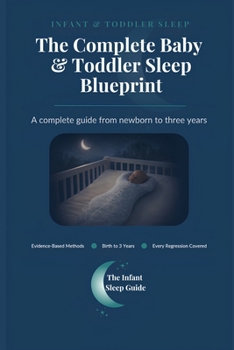
The Complete Baby and Toddler Sleep Blueprint
No Customer Reviews

You are exhausted. You have tried everything.
Sleep deprivation in the first year of parenting is one of the most underestimated challenges there is. It affects your health, your relationship, your ability to function - and it can make an otherwise joyful period feel like something to survive rather than something to savour.
What this guide coversThis is a complete, stage-by-stage sleep reference for the first three years of your child's life - not a single method, not a one-size-fits-all approach, but a full roadmap that meets you exactly where you are and takes you to where you want to be.
Stage 1 - Newborn (0-8 weeks): Why formal sleep training isn't possible yet, what to do instead, and how to lay the foundations that make everything easier laterStage 2 - 2 to 4 months: Surviving the 4-month regression, why it happens, and how to come out the other side with your sanity intactStage 3 - 4 to 6 months: The optimal sleep training window - all five methods compared in full, with a night-by-night Ferber schedule, the Chair Method, Pick-Up Put-Down, Fading, and Full ExtinctionStage 4 - 6 to 9 months: The 3-to-2 nap transition, separation anxiety, introducing solids, and dropping night feedsStage 5 - 9 to 12 months: The 8-to-10 month regression peak, standing in the cot, building the bedtime routine that carries you into the toddler yearsPart Two - Toddler Sleep (12 months to 3 years): The 2-to-1 nap transition, the 18-month regression, bedtime battles, the OK-to-wake clock, night fears and nightmares, the big bed transition, and dropping the napThis guide is for you if: You have a newborn and want to start with the right foundations from day oneYou are in the thick of the 4-month regression and need to understand what is actually happeningYou want to sleep train but are overwhelmed by conflicting advice and do not know which method to chooseYour baby was sleeping well and has suddenly stopped - and you need to know whyYou have a toddler who will not stay in bed and you are at the end of your ropeYou want one complete, reliable reference that covers the whole first three yearsWhat makes this guide different?Most sleep resources give you one method and tell you it is the answer. This guide gives you all of them - with the research behind each, the pros and cons, and enough detail to apply whichever one fits your baby's temperament and your family's philosophy.Every stage includes: A clear explanation of your baby's brain and body development at that age - because understanding why something is happening makes it dramatically easier to manageRealistic expectations - what is normal, what is not, and when to stop worryingSample schedules with full tables, timed to the minuteTroubleshooting sections for the most common problems at each stageA stage checklist so you know when you are ready to move onInside the guide: 5 sleep training methods explained in full - Ferber, Chair Method, Pick-Up Put-Down, Fading, and Full ExtinctionNight-by-night Ferber interval schedule10 sample daily schedules from newborn through 3 yearsEvery major regression mapped - what causes it, how long it lasts, exactly what to doComplete guide to the 3-to-2 and 2-to-1 nap transitionsNight weaning guidance for breastfed and formula-fed babiesToddler bedtime battles, curtain calls, the Bedtime Pass techniqueNight fears, nightmares vs night terrors, and how to respond to eachThe big bed transition - when to do it, how to do it, the Silent Return techniqueDropping the nap and implementing quiet time
Format:Paperback
Language:English
ISBN:B0GS81ZFLJ
ISBN13:9798251648553
Release Date:March 2026
Publisher:Independently Published
Length:108 Pages
Weight:0.34 lbs.
Dimensions:0.2" x 6.0" x 9.0"
Customer Reviews
0 rating
Copyright © 2026 Thriftbooks.com
Terms of Use | Privacy Policy | Do Not Sell/Share My Personal Information | Cookie Policy | Cookie Preferences | Accessibility Statement
ThriftBooks ® and the ThriftBooks ® logo are registered trademarks of Thrift Books Global, LLC
ThriftBooks ® and the ThriftBooks ® logo are registered trademarks of Thrift Books Global, LLC
