


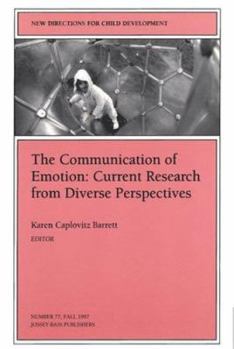
The Communication of Emotion: Current Research from Diverse Perspectives: New Directions for Child and Adolescent Development, Number 77
No Customer Reviews

The authors explore the cultural and familial factors that influence how emotions are communicated to children and the varied ways children's development is affected. They show how context--the nature of the relationship between partners, the cultural background, and the ongoing events surrounding communication between partners--plays a crucial role in determining what is communicated and understood through facial, vocal, and other means of emotion communication. And they reveal how emotion communication within the family directly affects the formation of children's self and other schemas and examine the role of emotion communication in the development of shame, guilt, and pride. This is the 77th issue of the quarterly journal New Directions for Child Development.
Format:Paperback
Language:English
ISBN:0787998958
ISBN13:9780787998950
Release Date:January 1998
Publisher:Jossey-Bass
Length:115 Pages
Weight:0.36 lbs.
Dimensions:3.0" x 13.0" x 28.0"
Related Subjects
PsychologyCustomer Reviews
0 rating
Copyright © 2025 Thriftbooks.com
Terms of Use | Privacy Policy | Do Not Sell/Share My Personal Information | Cookie Policy | Cookie Preferences | Accessibility Statement
ThriftBooks ® and the ThriftBooks ® logo are registered trademarks of Thrift Books Global, LLC
ThriftBooks ® and the ThriftBooks ® logo are registered trademarks of Thrift Books Global, LLC
