


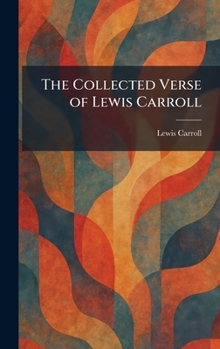
The Collected Verse of Lewis Carroll

"The Collected Verse of Lewis Carroll" is an extensive compilation of the poetic achievements of one of the most inventive minds in English literature. While primarily known for his prose, Lewis Carroll-the pseudonym of Charles Luttrell Dodgson-was a prolific poet whose work remains a cornerstone of the Victorian era. This collection features his iconic nonsense verse, including the celebrated "Jabberwocky" and "The Hunting of the Snark," alongside the whimsical poems that first appeared in his beloved "Alice" stories.
The work demonstrates Carroll's unique ability to blend rigorous logic with delightful absurdity, showcasing his talent for parodies, acrostics, and narrative verse. From lighthearted rhymes for children to more contemplative and satirical pieces, this volume offers a comprehensive look at the author's rhythmic ingenuity and linguistic playfulness. It serves as an essential treasury for readers seeking to explore the full breadth of Carroll's imagination. By gathering these diverse works into a single volume, the book highlights his enduring influence on the genre of nonsense literature and his lasting contribution to the British literary canon.
This work has been selected by scholars as being culturally important, and is part of the knowledge base of civilization as we know it. This work was reproduced from the original artifact, and remains as true to the original work as possible. Therefore, you may see the original copyright references, library stamps (as most of these works have been housed in our most important libraries around the world), and other notations in the work.
This work is in the public domain in the United States of America, and possibly other nations. Within the United States, you may freely copy and distribute this work, as no entity (individual or corporate) has a copyright on the body of the work.
As a reproduction of a historical artifact, this work may contain missing or blurred pages, poor pictures, errant marks, etc. Scholars believe, and we concur, that this work is important enough to be preserved, reproduced, and made generally available to the public. We appreciate your support of the preservation process, and thank you for being an important part of keeping this knowledge alive and relevant.
Customer Reviews
ThriftBooks ® and the ThriftBooks ® logo are registered trademarks of Thrift Books Global, LLC
