


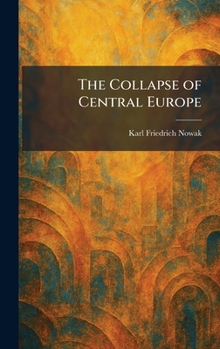
The Collapse of Central Europe

"The Collapse of Central Europe" is a definitive historical examination of the dramatic dissolution of the Austro-Hungarian Empire at the end of World War I. This comprehensive work explores the political, military, and social factors that precipitated the sudden fragmentation of a major world power. By chronicling the final months and days of the empire, the narrative provides a detailed look at the internal conflicts, shifting alliances, and diplomatic failures that characterized the region during this turbulent period.
Karl Friedrich Nowak provides an insightful analysis of the key figures and events that shaped the post-war landscape of Central Europe. The book details the profound impact of the 1918 armistice and the subsequent struggle to establish new national identities amidst the ruins of the old order. "The Collapse of Central Europe" serves as a vital resource for understanding the complex origins of modern European geopolitics, offering a somber look at the end of an era and the difficult birth of new states. It is an essential read for students of history and anyone interested in the lasting consequences of the Great War.
This work has been selected by scholars as being culturally important, and is part of the knowledge base of civilization as we know it. This work was reproduced from the original artifact, and remains as true to the original work as possible. Therefore, you may see the original copyright references, library stamps (as most of these works have been housed in our most important libraries around the world), and other notations in the work.
This work is in the public domain in the United States of America, and possibly other nations. Within the United States, you may freely copy and distribute this work, as no entity (individual or corporate) has a copyright on the body of the work.
As a reproduction of a historical artifact, this work may contain missing or blurred pages, poor pictures, errant marks, etc. Scholars believe, and we concur, that this work is important enough to be preserved, reproduced, and made generally available to the public. We appreciate your support of the preservation process, and thank you for being an important part of keeping this knowledge alive and relevant.
Related Subjects
HistoryCustomer Reviews
ThriftBooks ® and the ThriftBooks ® logo are registered trademarks of Thrift Books Global, LLC
