


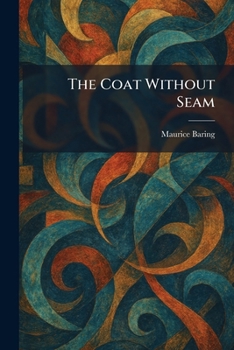
The Coat Without Seam

"The Coat Without Seam" is a profound literary work by Maurice Baring that explores the intricate intersections of history, faith, and the human soul. The narrative follows the life of Christopher Trevenen, a man whose personal journey is subtly intertwined with the ancient legend of the seamless robe of Christ. As Christopher moves through various diplomatic and social circles in Europe, the story delves into themes of disillusionment and the persistent search for spiritual meaning in a world marked by transition and uncertainty.
Baring's prose captures the nuances of early 20th-century intellectual life, presenting a sensitive character study of a man grappling with his heritage and his beliefs. The recurring motif of the sacred relic serves as a powerful symbol of unity and the unseen forces that shape individual destinies. Through its elegant storytelling and philosophical depth, "The Coat Without Seam" offers a moving meditation on the complexities of religious experience and the enduring power of tradition. This novel stands as a significant example of Baring's mastery in blending historical atmosphere with a deep understanding of the internal spiritual struggles inherent in the human condition.
This work has been selected by scholars as being culturally important, and is part of the knowledge base of civilization as we know it. This work was reproduced from the original artifact, and remains as true to the original work as possible. Therefore, you may see the original copyright references, library stamps (as most of these works have been housed in our most important libraries around the world), and other notations in the work.
This work is in the public domain in the United States of America, and possibly other nations. Within the United States, you may freely copy and distribute this work, as no entity (individual or corporate) has a copyright on the body of the work.
As a reproduction of a historical artifact, this work may contain missing or blurred pages, poor pictures, errant marks, etc. Scholars believe, and we concur, that this work is important enough to be preserved, reproduced, and made generally available to the public. We appreciate your support of the preservation process, and thank you for being an important part of keeping this knowledge alive and relevant.
Customer Reviews
ThriftBooks ® and the ThriftBooks ® logo are registered trademarks of Thrift Books Global, LLC
