


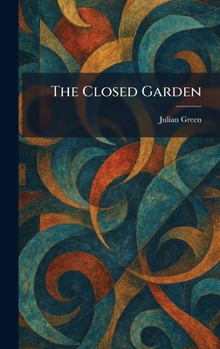
The Closed Garden

"The Closed Garden" is a haunting psychological masterpiece that explores the suffocating atmosphere of provincial life and the slow disintegration of a young woman's psyche. The narrative centers on Adrienne Mesurat, a protagonist trapped in a monotonous and repressive existence under the watchful eyes of her tyrannical father and her sickly, embittered sister. Within the confines of their somber home, Adrienne's isolation breeds a desperate, obsessive longing for a local doctor she barely knows, leading her down a path of emotional instability and tragic defiance.
Through meticulous characterization and atmospheric prose, Julian Green crafts a dark portrait of domestic confinement and the devastating effects of loneliness. The work delves into themes of madness, social repression, and the destructive power of unexpressed desires. As Adrienne struggles to break free from the emotional prison of her family, her internal world becomes increasingly fractured. "The Closed Garden" is a profound and somber exploration of the human condition, standing as a landmark of 20th-century psychological literature that continues to resonate with its portrayal of a mind pushed to its absolute limits.
This work has been selected by scholars as being culturally important, and is part of the knowledge base of civilization as we know it. This work was reproduced from the original artifact, and remains as true to the original work as possible. Therefore, you may see the original copyright references, library stamps (as most of these works have been housed in our most important libraries around the world), and other notations in the work.
This work is in the public domain in the United States of America, and possibly other nations. Within the United States, you may freely copy and distribute this work, as no entity (individual or corporate) has a copyright on the body of the work.
As a reproduction of a historical artifact, this work may contain missing or blurred pages, poor pictures, errant marks, etc. Scholars believe, and we concur, that this work is important enough to be preserved, reproduced, and made generally available to the public. We appreciate your support of the preservation process, and thank you for being an important part of keeping this knowledge alive and relevant.
Customer Reviews
ThriftBooks ® and the ThriftBooks ® logo are registered trademarks of Thrift Books Global, LLC
