


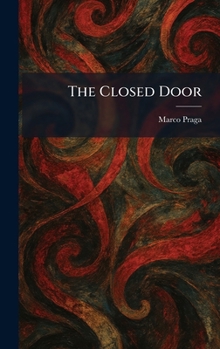
The Closed Door

"The Closed Door" is a gripping psychological drama by the renowned Italian playwright Marco Praga. Set within the tense atmosphere of early 20th-century society, the play explores the profound emotional and moral consequences of hidden truths and domestic secrets. The narrative centers on the intricate relationships between family members whose lives are governed by unspoken rules and the heavy weight of the past.
As characters confront the reality behind their social facades, Praga masterfully examines themes of paternity, loyalty, and the internal conflict between personal desire and societal expectations. Known for his contributions to the development of modern Italian theater, Praga brings a stark realism and profound psychological depth to this work. "The Closed Door" remains a significant example of early 20th-century drama, offering a sophisticated look at the human condition and the fragile nature of the familial bond. This work highlights Praga's skill in crafting intense dialogue and complex characters that resonate with readers interested in the evolution of European theatrical traditions and the complexities of human emotion.
This work has been selected by scholars as being culturally important, and is part of the knowledge base of civilization as we know it. This work was reproduced from the original artifact, and remains as true to the original work as possible. Therefore, you may see the original copyright references, library stamps (as most of these works have been housed in our most important libraries around the world), and other notations in the work.
This work is in the public domain in the United States of America, and possibly other nations. Within the United States, you may freely copy and distribute this work, as no entity (individual or corporate) has a copyright on the body of the work.
As a reproduction of a historical artifact, this work may contain missing or blurred pages, poor pictures, errant marks, etc. Scholars believe, and we concur, that this work is important enough to be preserved, reproduced, and made generally available to the public. We appreciate your support of the preservation process, and thank you for being an important part of keeping this knowledge alive and relevant.
Related Subjects
DramaCustomer Reviews
ThriftBooks ® and the ThriftBooks ® logo are registered trademarks of Thrift Books Global, LLC
