


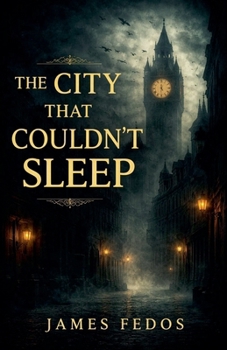
The City That Couldn't Sleep

When the city's bells fail to ring and the clocks refuse to advance, the night does not descend into chaos. It is managed.
Luca Verrone is a trusted administrator, relied upon to reconcile irregularities and preserve the appearance of order. As the city enforces continuity through amended reports, sealed streets, and exhausted men who are never relieved, Luca discovers that time itself has become a tool of governance. Sleep is delayed. Fatigue is tolerated. Obedience is measured.
Beneath the city's towers lies an older infrastructure-one designed not to tell time, but to calculate how long a population can endure pressure before breaking in useful ways. What was once buried as a necessary cruelty is being revived with precision, legality, and terrifying restraint.
The City That Couldn't Sleep is a historical thriller about institutions under strain, the weaponization of routine, and the danger of systems that refuse to rest. This is a slow-burn novel driven by procedure rather than spectacle, where the most profound violence is administrative and the greatest threat is compliance.
Order will be maintained.
Sleep is optional.
Customer Reviews
ThriftBooks ® and the ThriftBooks ® logo are registered trademarks of Thrift Books Global, LLC
