


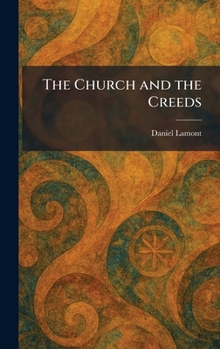
The Church and the Creeds

"The Church and the Creeds" provides a thorough and insightful examination of the development and significance of Christian confessions throughout ecclesiastical history. In this work, Daniel Lamont explores the fundamental relationship between the institutional church and the formal statements of faith that have defined its core beliefs for centuries. The text delves into the origins of the major creeds, analyzing the theological debates and historical pressures that necessitated their formulation.
Through a scholarly lens, the book investigates how these foundational documents have served as both a unifying force and a source of doctrinal clarity within various Christian traditions. By tracing the evolution of these standards from the early church to the modern era, Lamont offers a comprehensive overview of how Christian identity is articulated, defended, and preserved. "The Church and the Creeds" is an essential resource for students of theology, church historians, and anyone interested in the intellectual foundations of the faith. It emphasizes the enduring value of these ancient confessions in a changing religious landscape, highlighting their vital role in shaping the spiritual and communal life of the global church.
This work has been selected by scholars as being culturally important, and is part of the knowledge base of civilization as we know it. This work was reproduced from the original artifact, and remains as true to the original work as possible. Therefore, you may see the original copyright references, library stamps (as most of these works have been housed in our most important libraries around the world), and other notations in the work.
This work is in the public domain in the United States of America, and possibly other nations. Within the United States, you may freely copy and distribute this work, as no entity (individual or corporate) has a copyright on the body of the work.
As a reproduction of a historical artifact, this work may contain missing or blurred pages, poor pictures, errant marks, etc. Scholars believe, and we concur, that this work is important enough to be preserved, reproduced, and made generally available to the public. We appreciate your support of the preservation process, and thank you for being an important part of keeping this knowledge alive and relevant.
Customer Reviews
ThriftBooks ® and the ThriftBooks ® logo are registered trademarks of Thrift Books Global, LLC
