


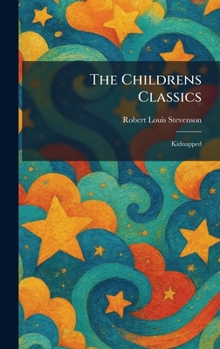
The Childrens Classics: Kidnapped

"Kidnapped" is a cornerstone of historical adventure literature, set against the turbulent backdrop of 18th-century Scotland following the Jacobite rising. The story follows young David Balfour, a recently orphaned youth who discovers he is the rightful heir to a significant estate. However, his treacherous uncle Ebenezer conspires to have him kidnapped and sold into servitude in the American colonies.
David's journey takes a dramatic turn when the ship, the Covenant, strikes a reef. In the chaos, David forms an unlikely alliance with Alan Breck Stewart, a charismatic Jacobite rebel and master swordsman. Together, they embark on a perilous flight across the rugged Scottish Highlands, evading British troops and navigating a landscape filled with political intrigue and physical danger.
Robert Louis Stevenson masterfully combines elements of the coming-of-age novel with a vivid exploration of loyalty, honor, and the cultural tensions of the era. Renowned for its atmospheric descriptions and compelling character development, "Kidnapped" remains a timeless tale of survival and friendship that continues to captivate readers of all ages. This classic work showcases Stevenson's skill in weaving historical fact with breathless fiction, ensuring its place as a staple of English literature.
This work has been selected by scholars as being culturally important, and is part of the knowledge base of civilization as we know it. This work was reproduced from the original artifact, and remains as true to the original work as possible. Therefore, you may see the original copyright references, library stamps (as most of these works have been housed in our most important libraries around the world), and other notations in the work.
This work is in the public domain in the United States of America, and possibly other nations. Within the United States, you may freely copy and distribute this work, as no entity (individual or corporate) has a copyright on the body of the work.
As a reproduction of a historical artifact, this work may contain missing or blurred pages, poor pictures, errant marks, etc. Scholars believe, and we concur, that this work is important enough to be preserved, reproduced, and made generally available to the public. We appreciate your support of the preservation process, and thank you for being an important part of keeping this knowledge alive and relevant.
Customer Reviews
ThriftBooks ® and the ThriftBooks ® logo are registered trademarks of Thrift Books Global, LLC
