


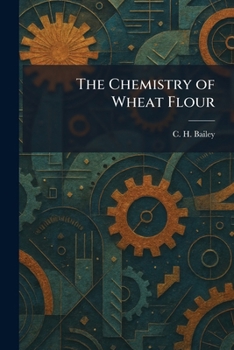
The Chemistry of Wheat Flour

"The Chemistry of Wheat Flour" provides a comprehensive scientific examination of the biochemical and physical properties of wheat and its derivatives. Written by C. H. Bailey, this foundational text delves into the intricate relationship between the chemical composition of wheat and its performance in milling and baking. The work covers essential topics such as the proteins of wheat, specifically gluten, the role of enzymes, carbohydrate content, and the impact of mineral constituents on flour quality.
This volume serves as a rigorous technical guide for chemists, millers, and food scientists seeking to understand the biological variables that influence grain quality. From the development of the wheat kernel to the complex transformations that occur during the flour production process, the author offers deep insights into the organic and inorganic components that define wheat's utility. It remains a significant reference for those interested in the historical development of cereal chemistry and the scientific principles that underpin modern food technology and agricultural science.
This work has been selected by scholars as being culturally important, and is part of the knowledge base of civilization as we know it. This work was reproduced from the original artifact, and remains as true to the original work as possible. Therefore, you may see the original copyright references, library stamps (as most of these works have been housed in our most important libraries around the world), and other notations in the work.
This work is in the public domain in the United States of America, and possibly other nations. Within the United States, you may freely copy and distribute this work, as no entity (individual or corporate) has a copyright on the body of the work.
As a reproduction of a historical artifact, this work may contain missing or blurred pages, poor pictures, errant marks, etc. Scholars believe, and we concur, that this work is important enough to be preserved, reproduced, and made generally available to the public. We appreciate your support of the preservation process, and thank you for being an important part of keeping this knowledge alive and relevant.
Related Subjects
Engineering Science Science & Math Science & Scientists Science & Technology TechnologyCustomer Reviews
ThriftBooks® and the ThriftBooks® logo are registered trademarks of Thrift Books Global, LLC
